
Een (niet zo)
persoonlijk
dagboek
Gedachten op de tap
Etikets
curated details
Soft Walls
2026/04/08
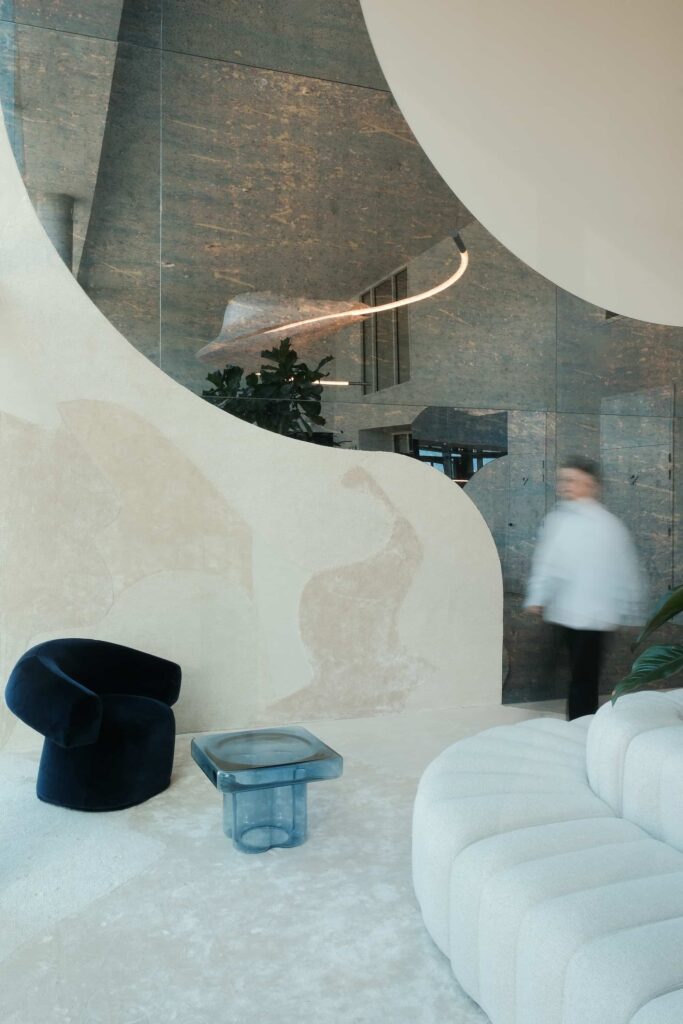
In contemporary interior architecture, the role of materiality extends far beyond aesthetics. Soft walls, developed through the use of textile materials, offer a nuanced response to the growing need for comfort, performance and human centred design. They introduce a tactile dimension that changes how a space is perceived and experienced. Unlike harder surfaces, textile applications absorb sound, reduce reverberation and contribute to a more controlled acoustic environment. In workplaces and hospitality settings, this directly supports concentration, communication and overall well being. At a spatial level, soft walls help articulate the environment. They can define quieter zones, frame meeting areas or create moments of retreat within more open layouts. This ability to subtly structure space without relying on rigid boundaries allows for greater flexibility while maintaining clarity and comfort. Their impact is also emotional. Texture, softness and material depth bring a sense of warmth and ease that balances more technical or formal elements within a project. This contributes to creating environments that feel more welcoming, more intuitive and ultimately more attuned to the people who use them. From a strategic perspective, integrating soft wall systems requires a careful balance between performance and expression. Acoustic requirements, durability, maintenance and integration with other elements must align with the overall design intent. When resolved with precision, these solutions become an integral part of the spatial identity rather than an added layer.