Circae Polyclinique
Scope
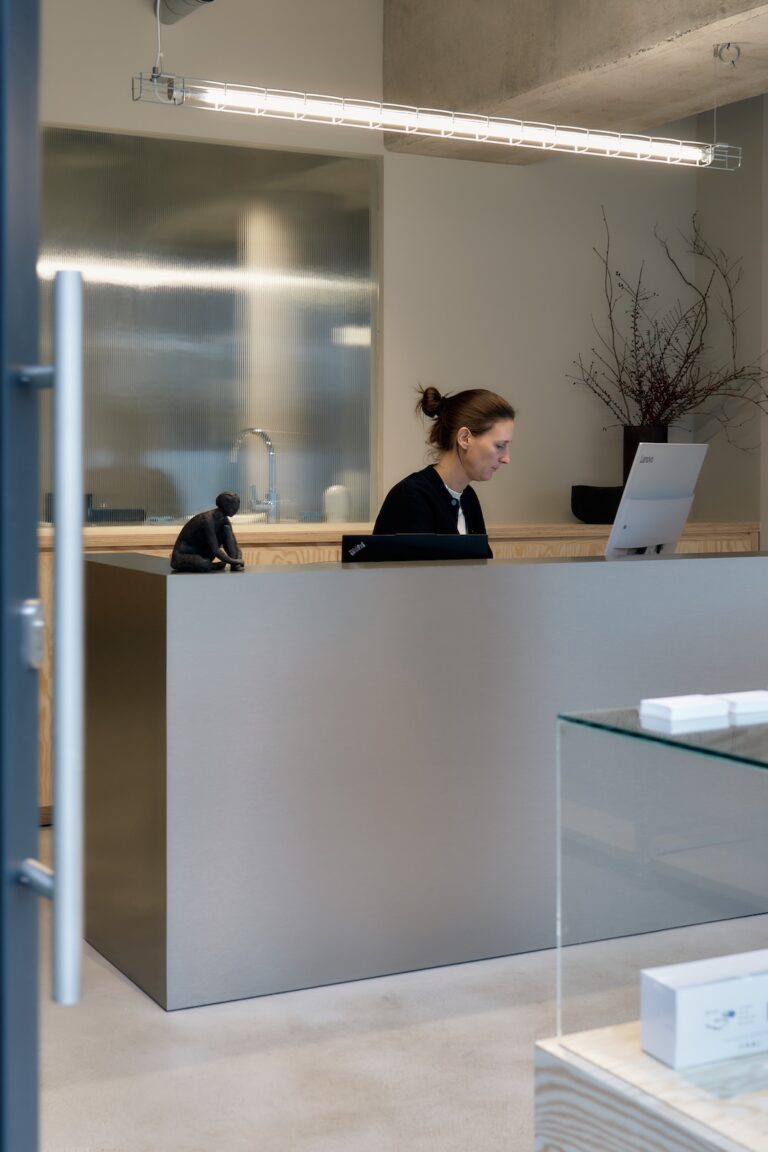
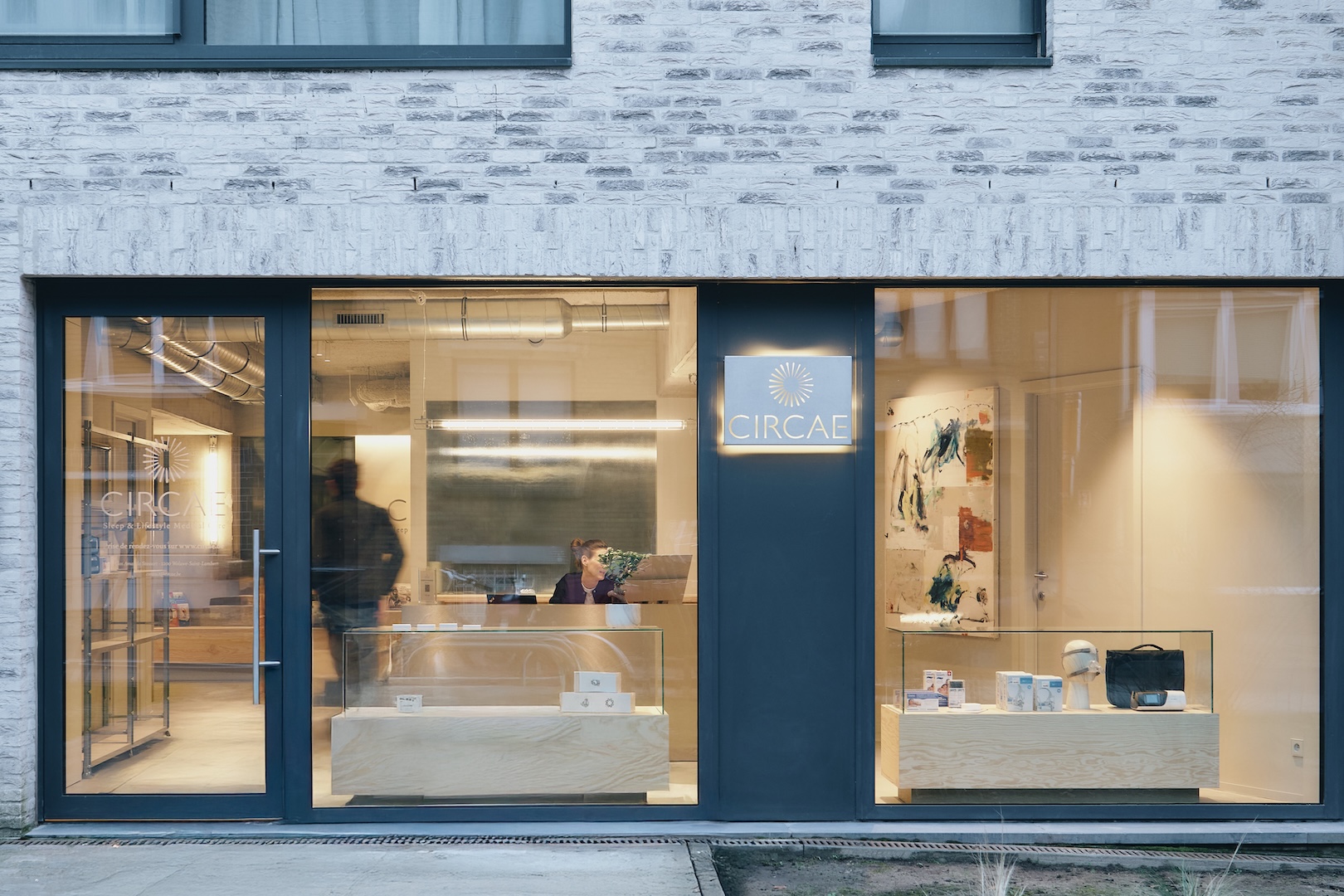
In 2024, we were invited to develop a proposal for the new Circae Polyclinique in Woluwe-Saint-Lambert. Located on the ground floor of a small three-storey residential building, the 250 m² space was conceived to host a multidisciplinary medical center, bringing together various consultation rooms, shared facilities, and a central reception area.
The project sought to balance technical and functional requirements with a welcoming identity, creating a human centred environment that supports both patient care and collaborative work while offering a distinctive, yet reassuring atmosphere.
Design approach
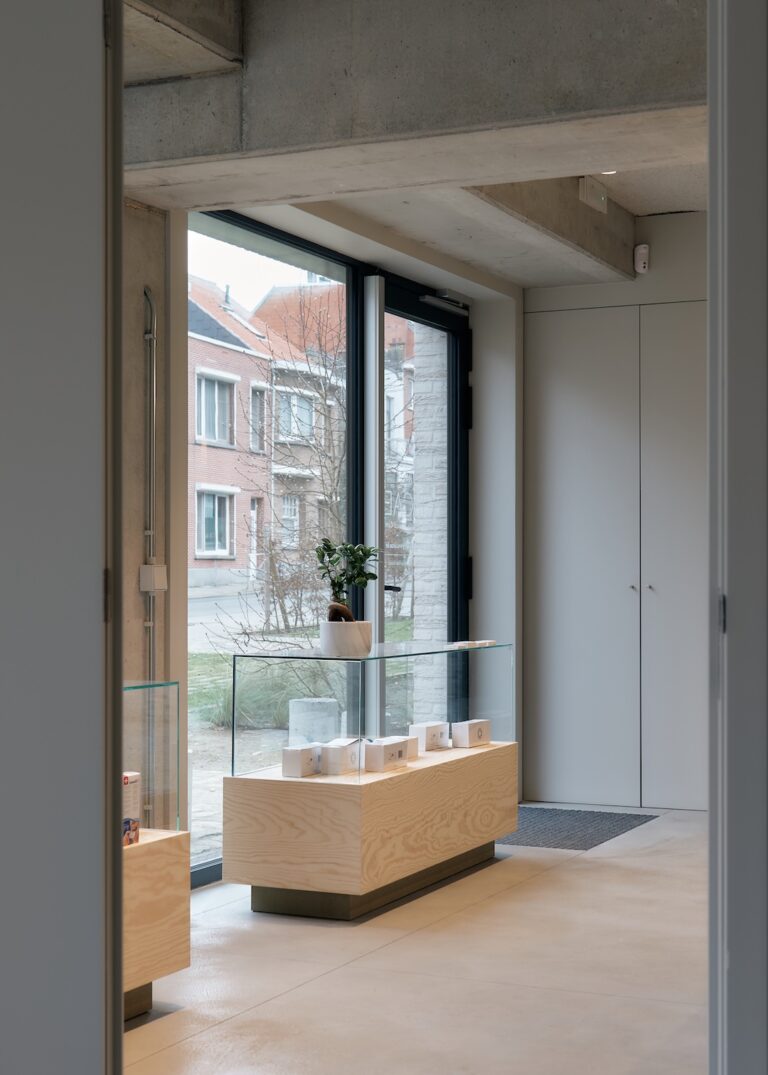
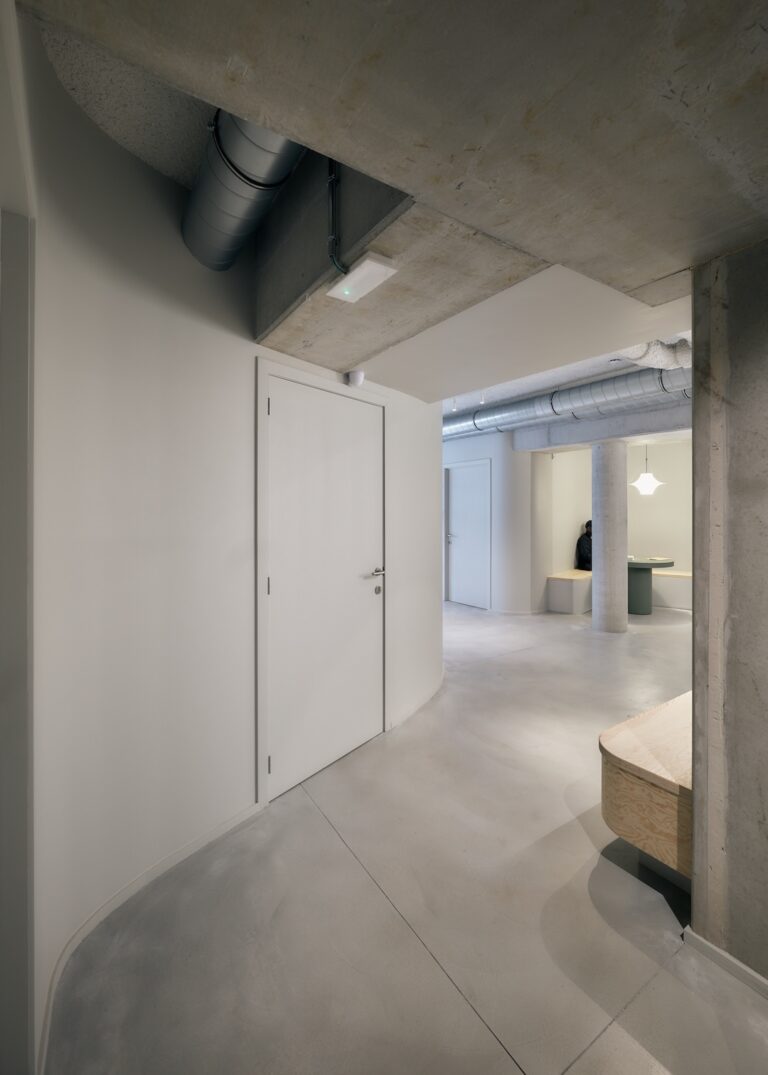
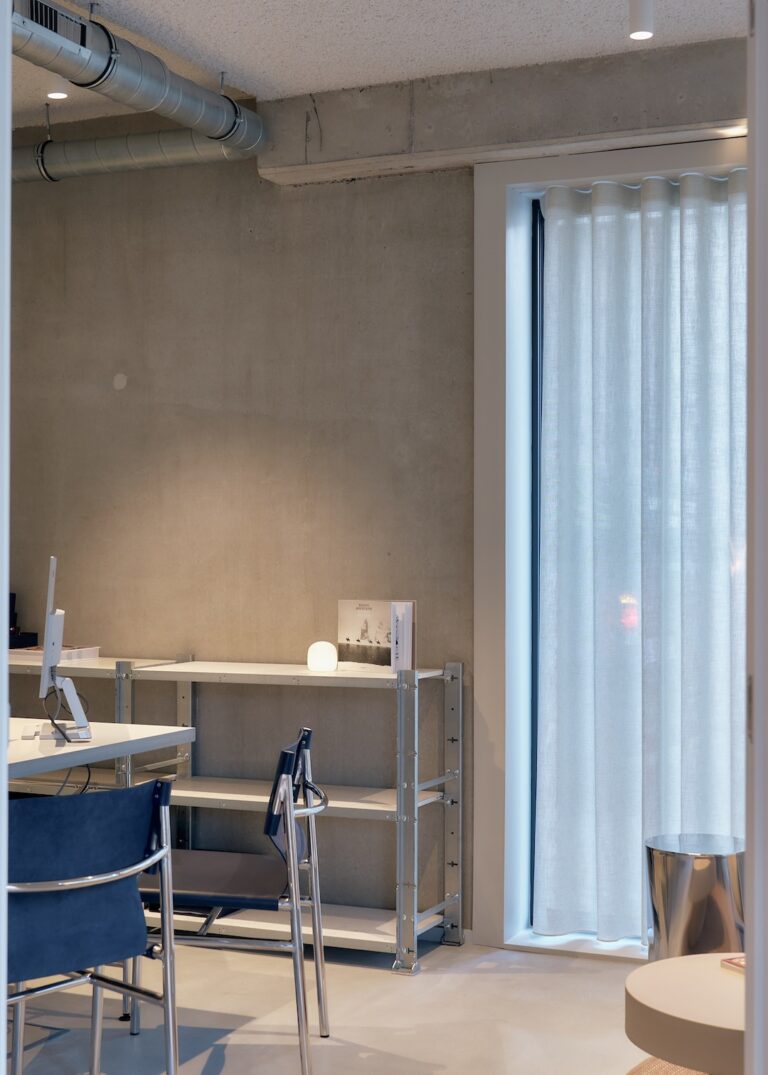
The ground floor was acquired in a casco state and revealed several constraints, notably low ceiling heights and limited natural light, which became the project’s main challenges in creating a space that was both usable and qualitative.
Our intervention focused on optimizing space, carefully coordinating technical requirements, and relying on minimal interventions and finishes to create a clear identity with careful consideration of the budget framework.
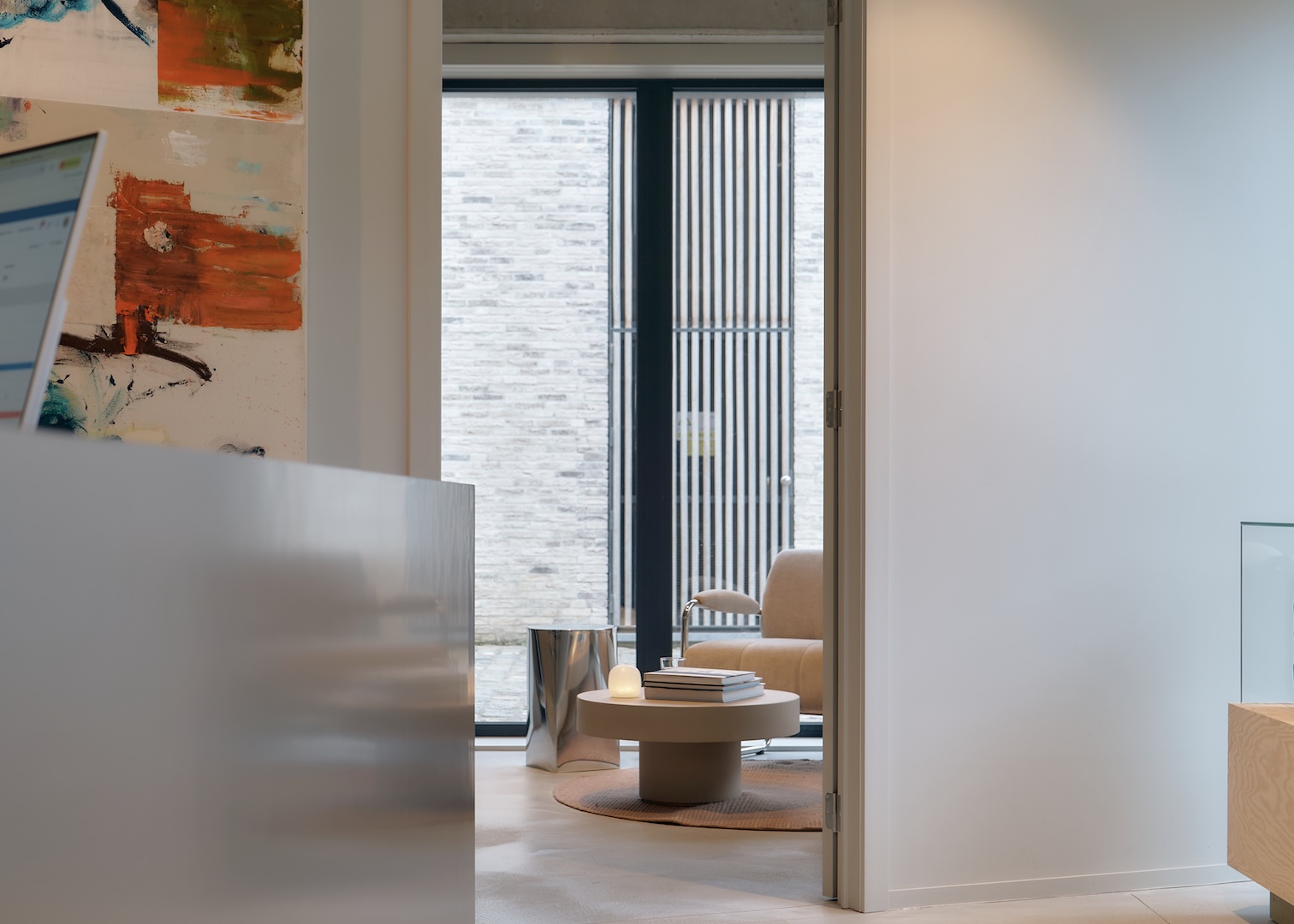
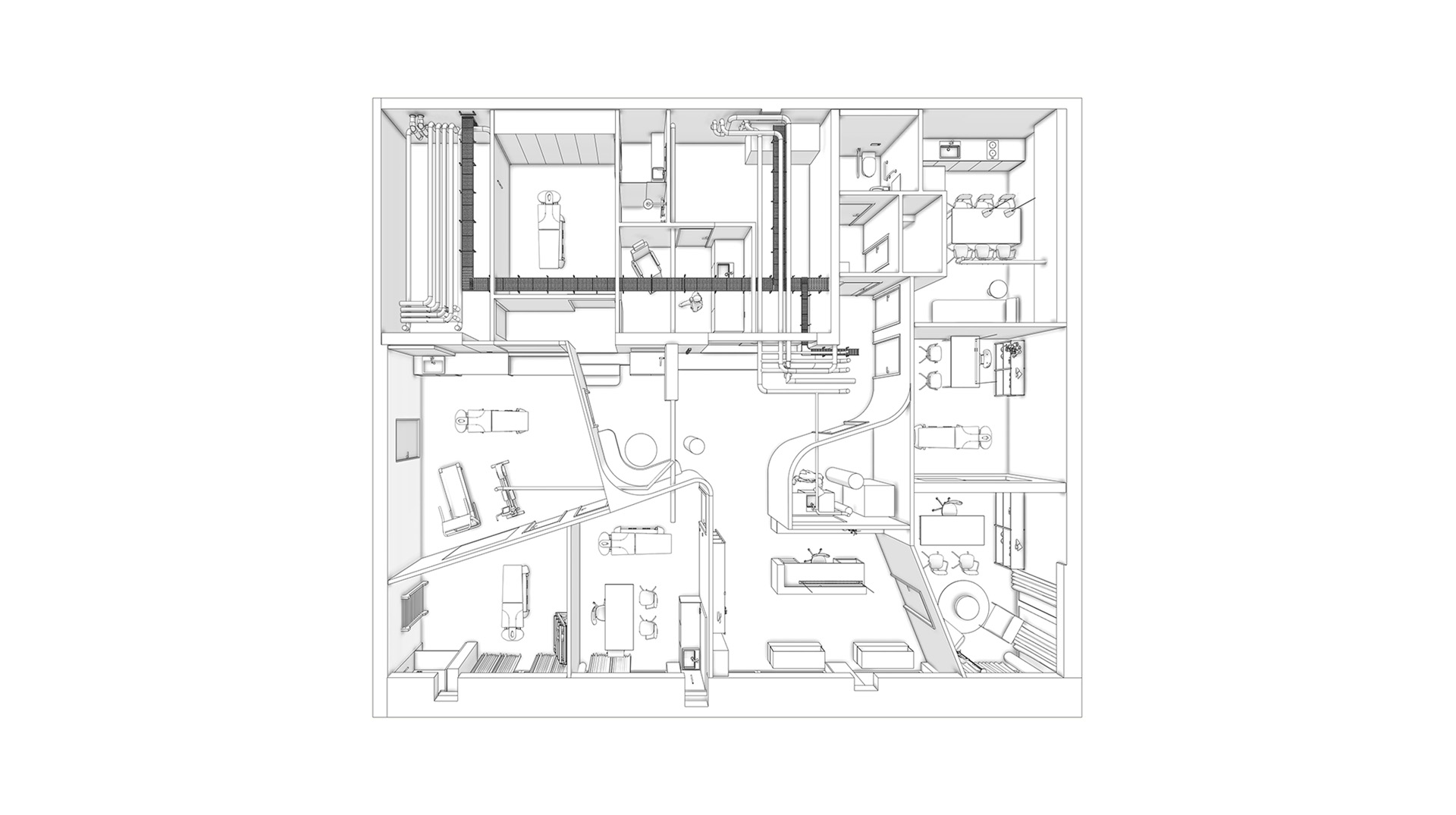
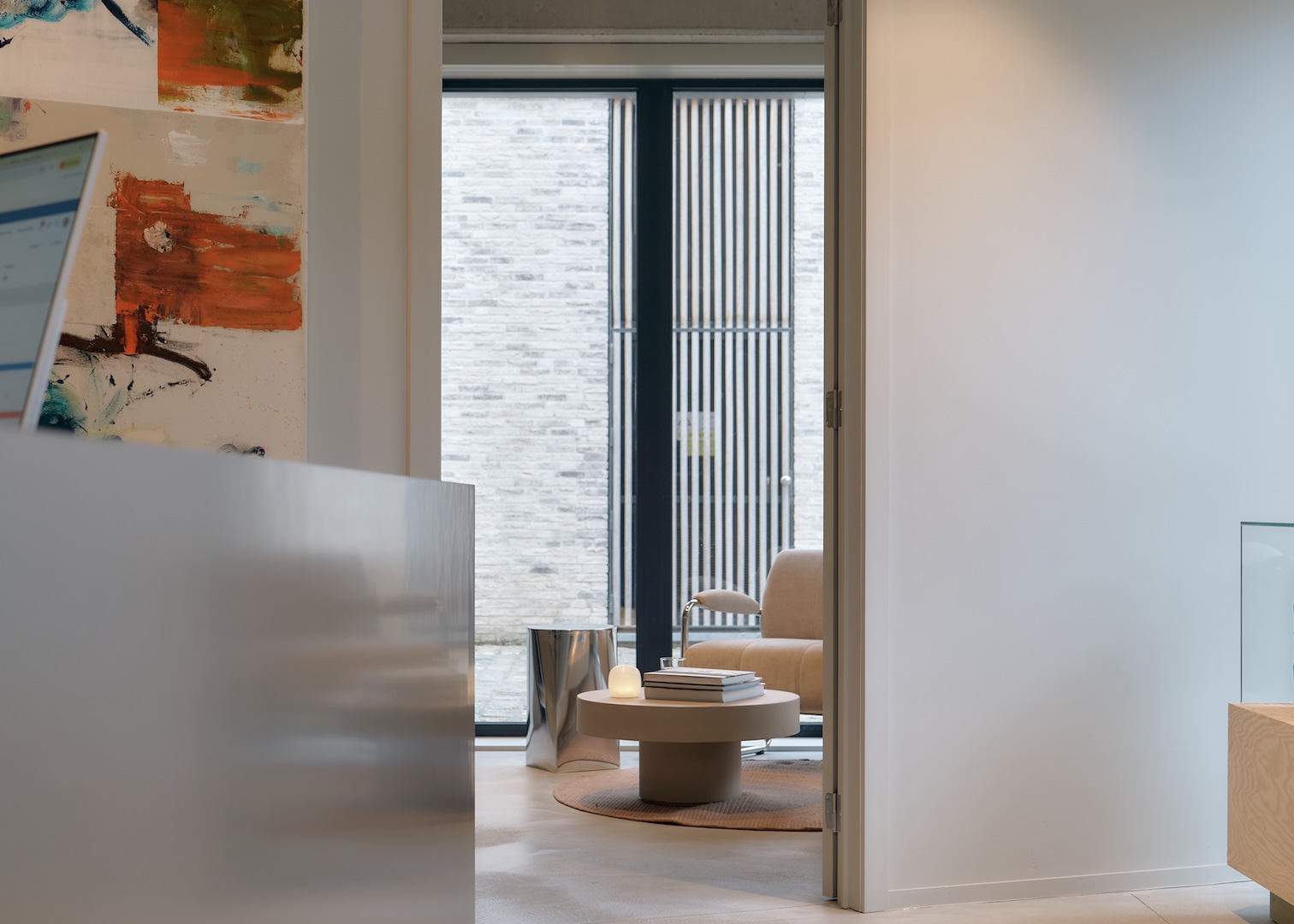
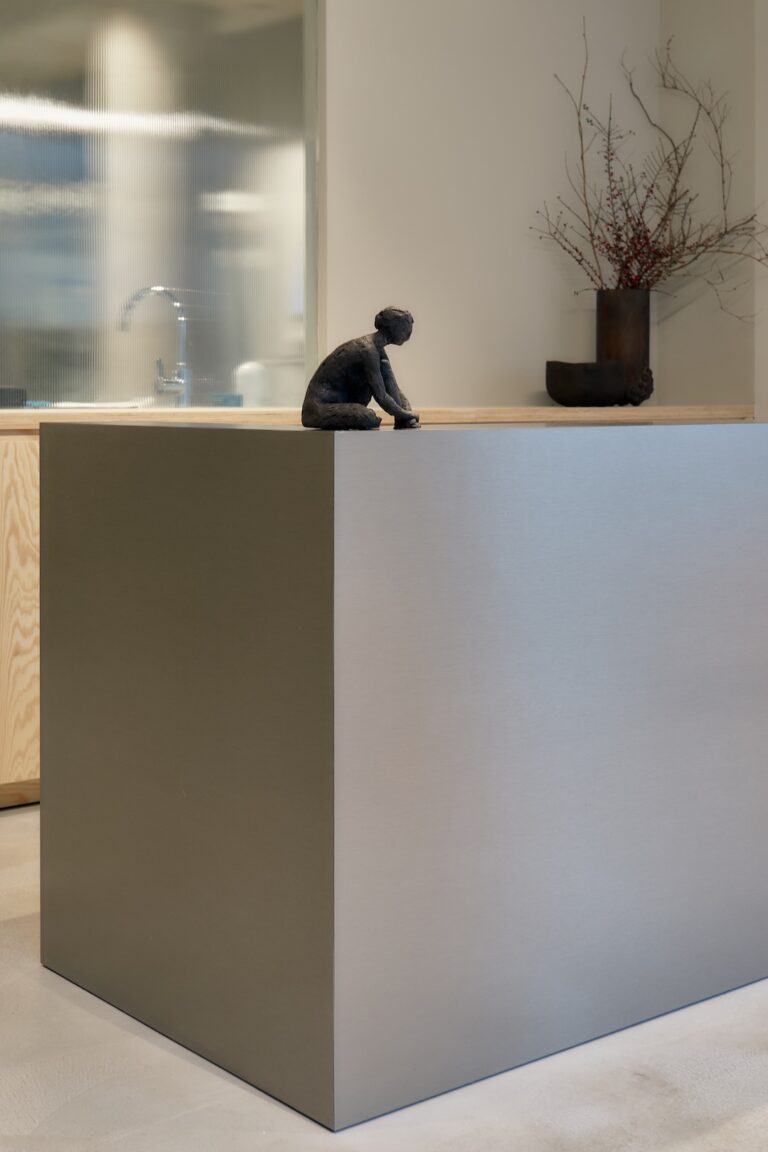
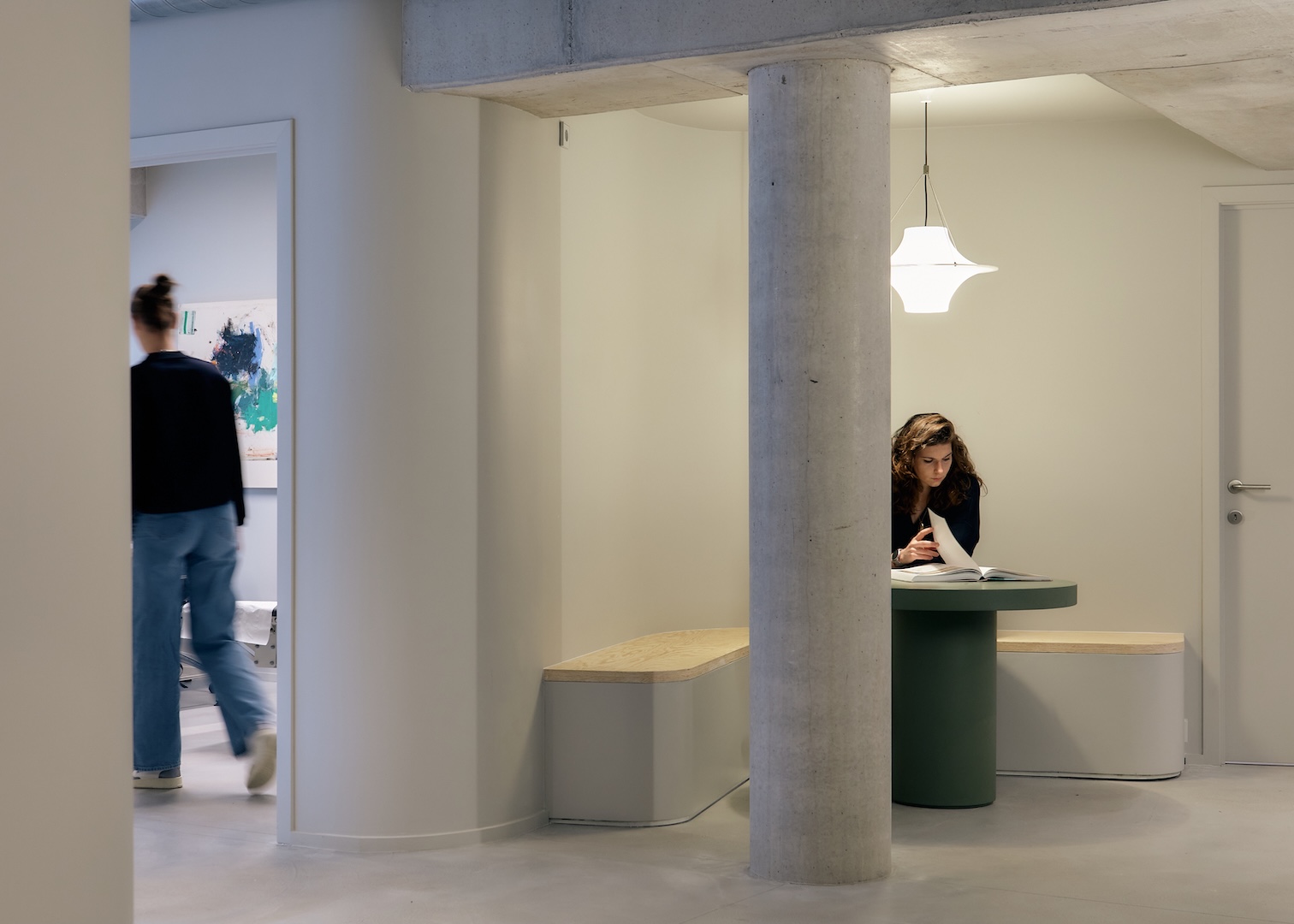
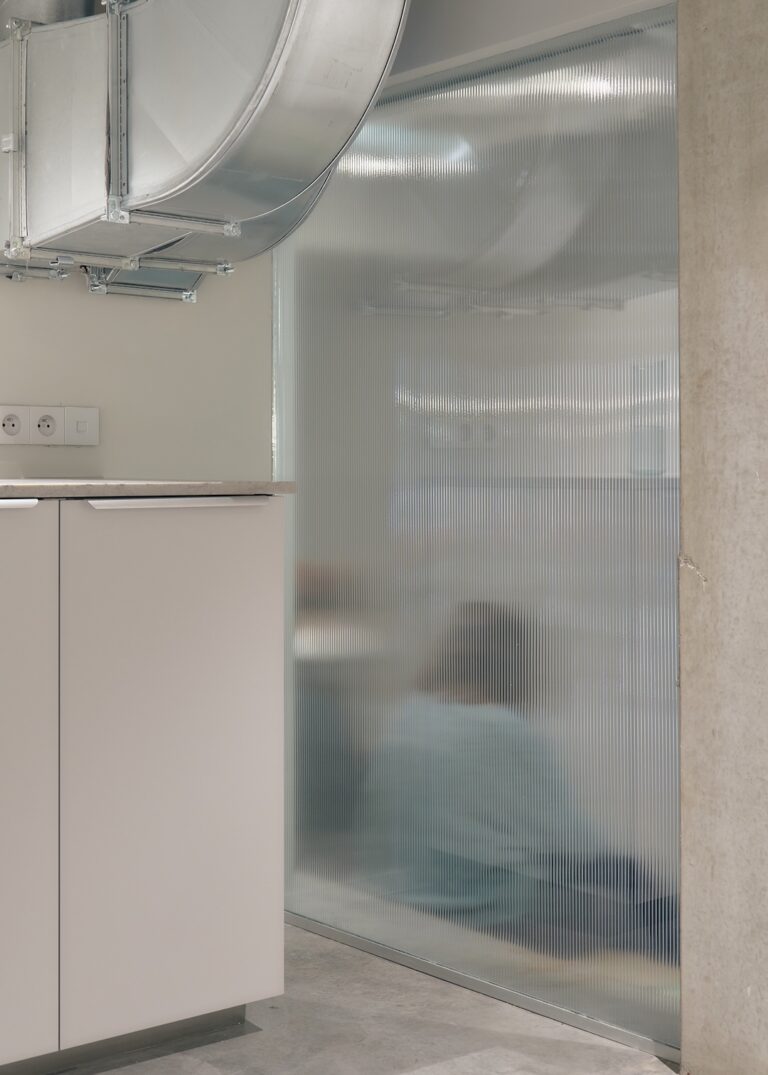
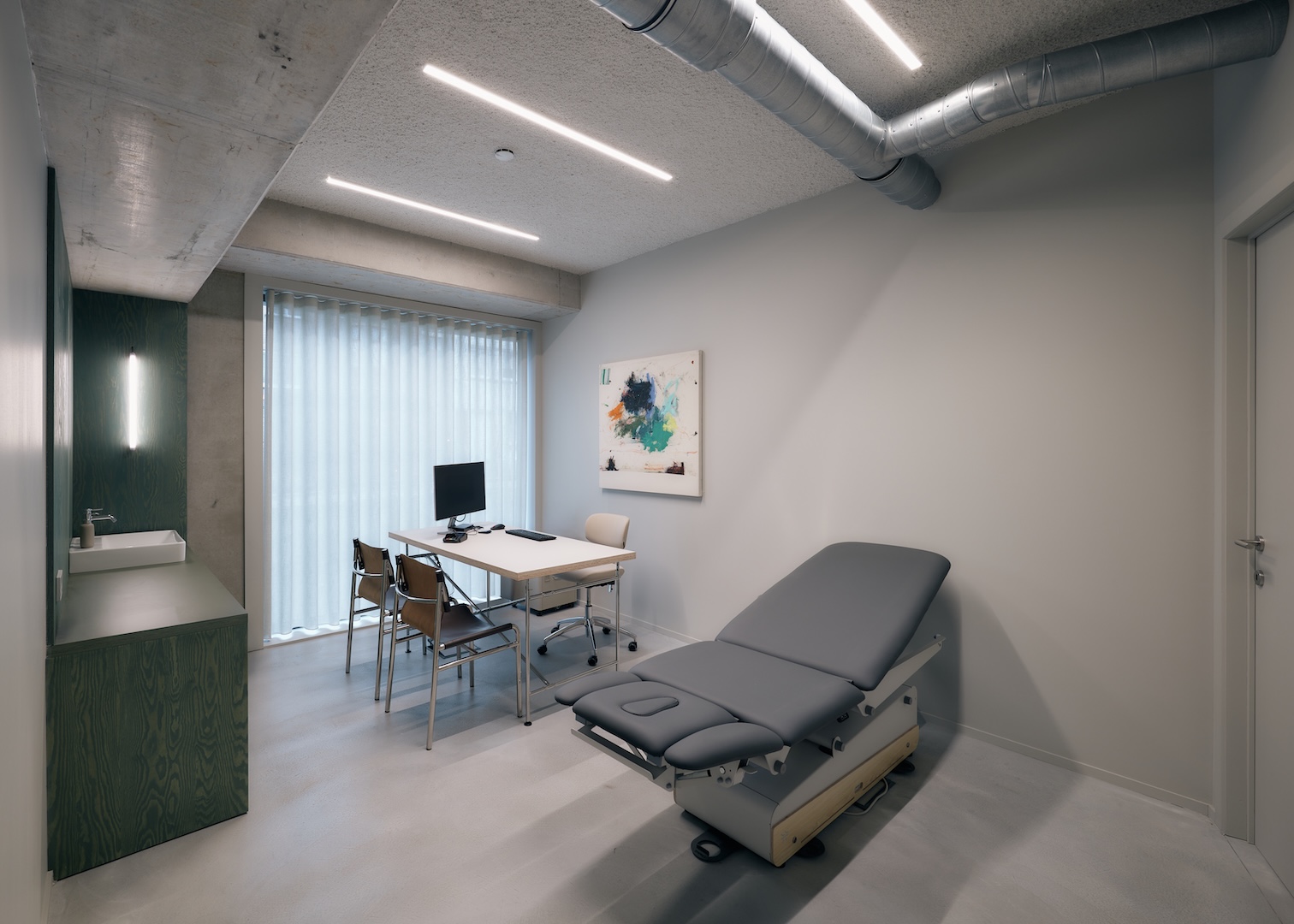
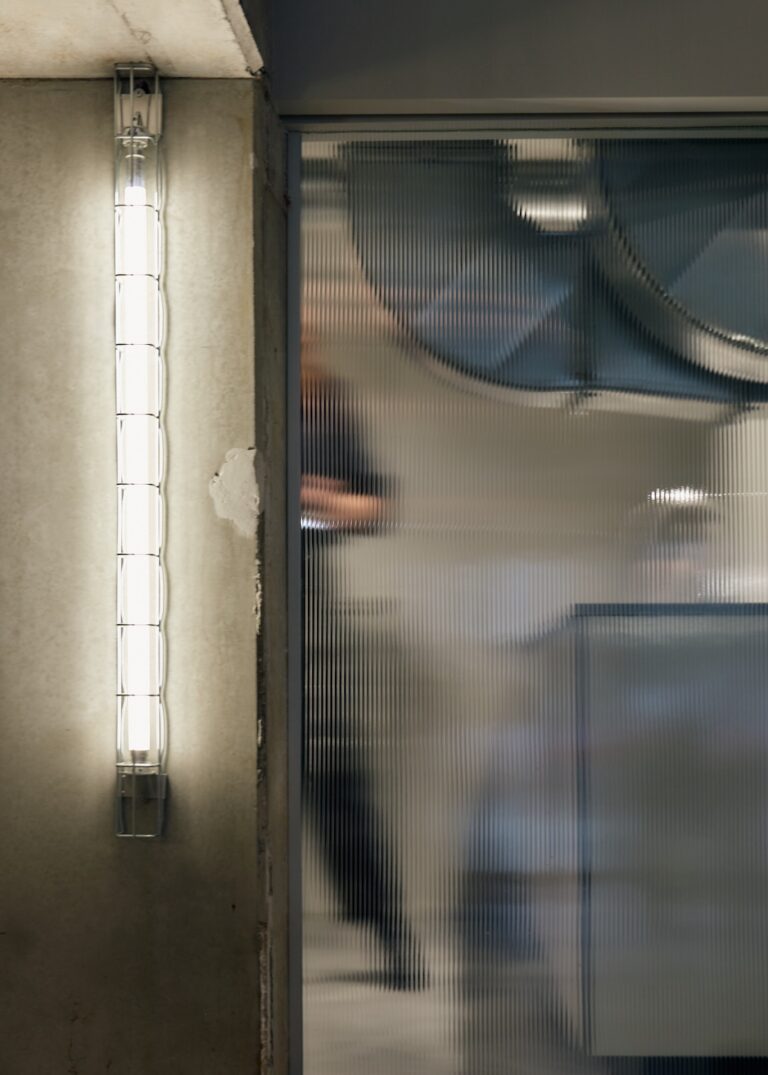
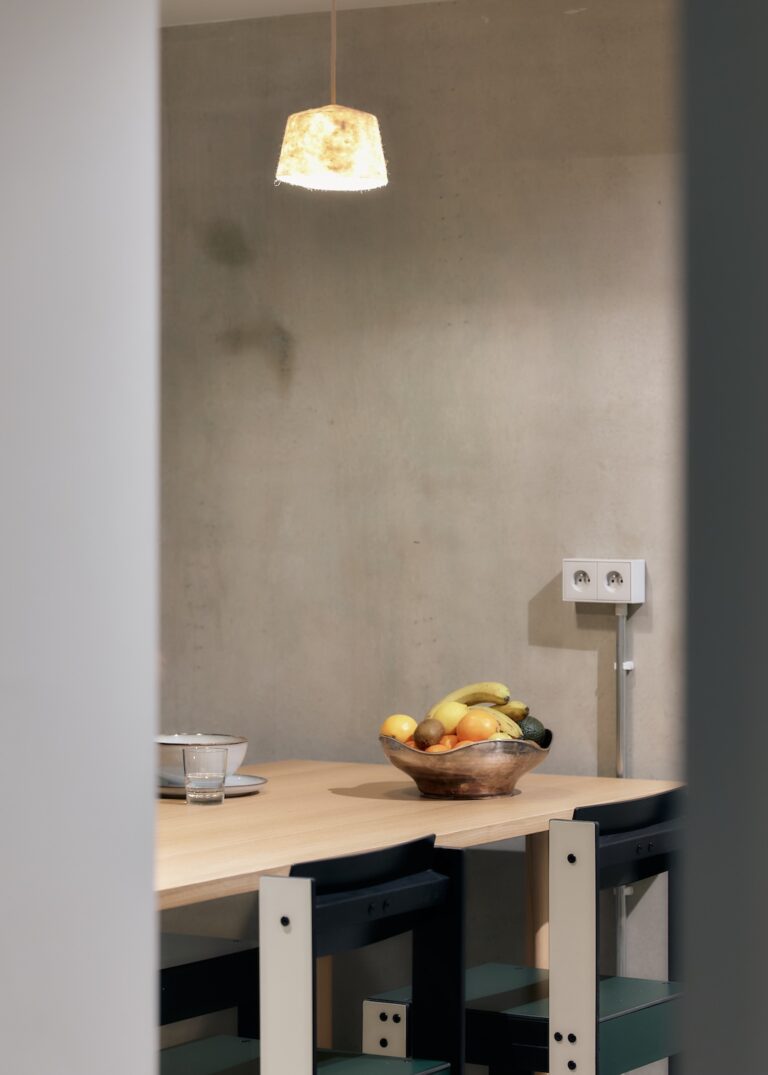
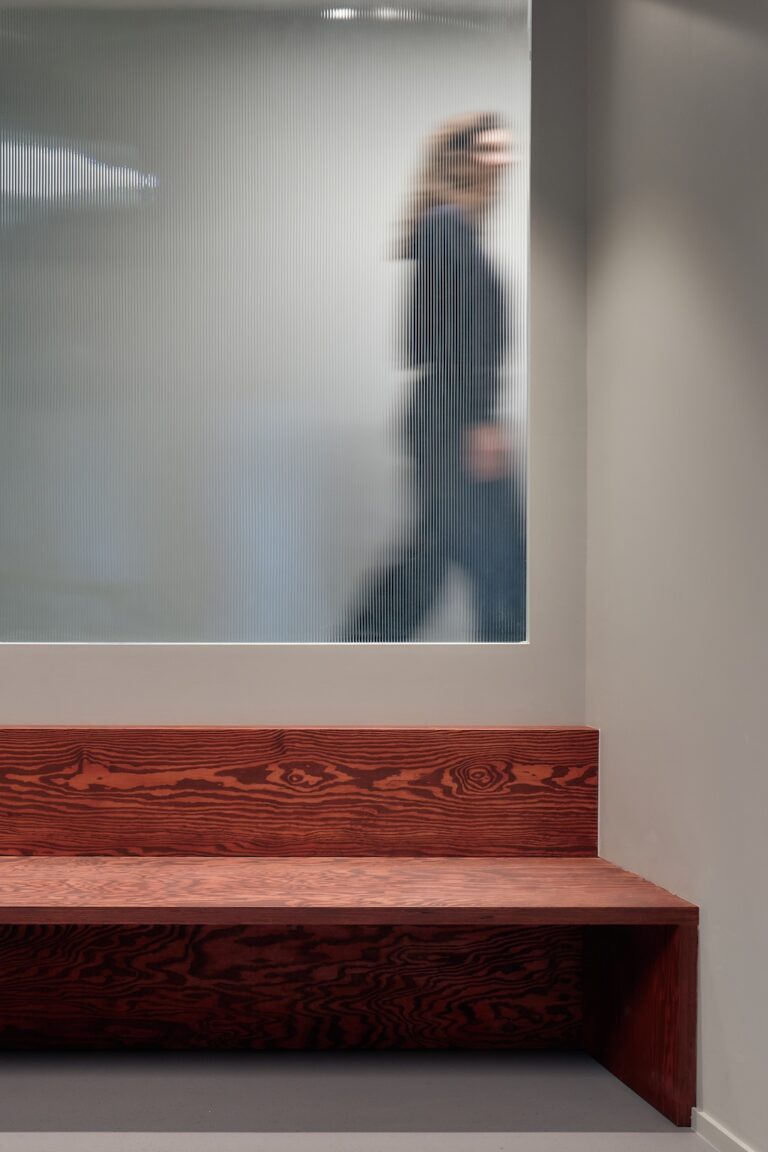
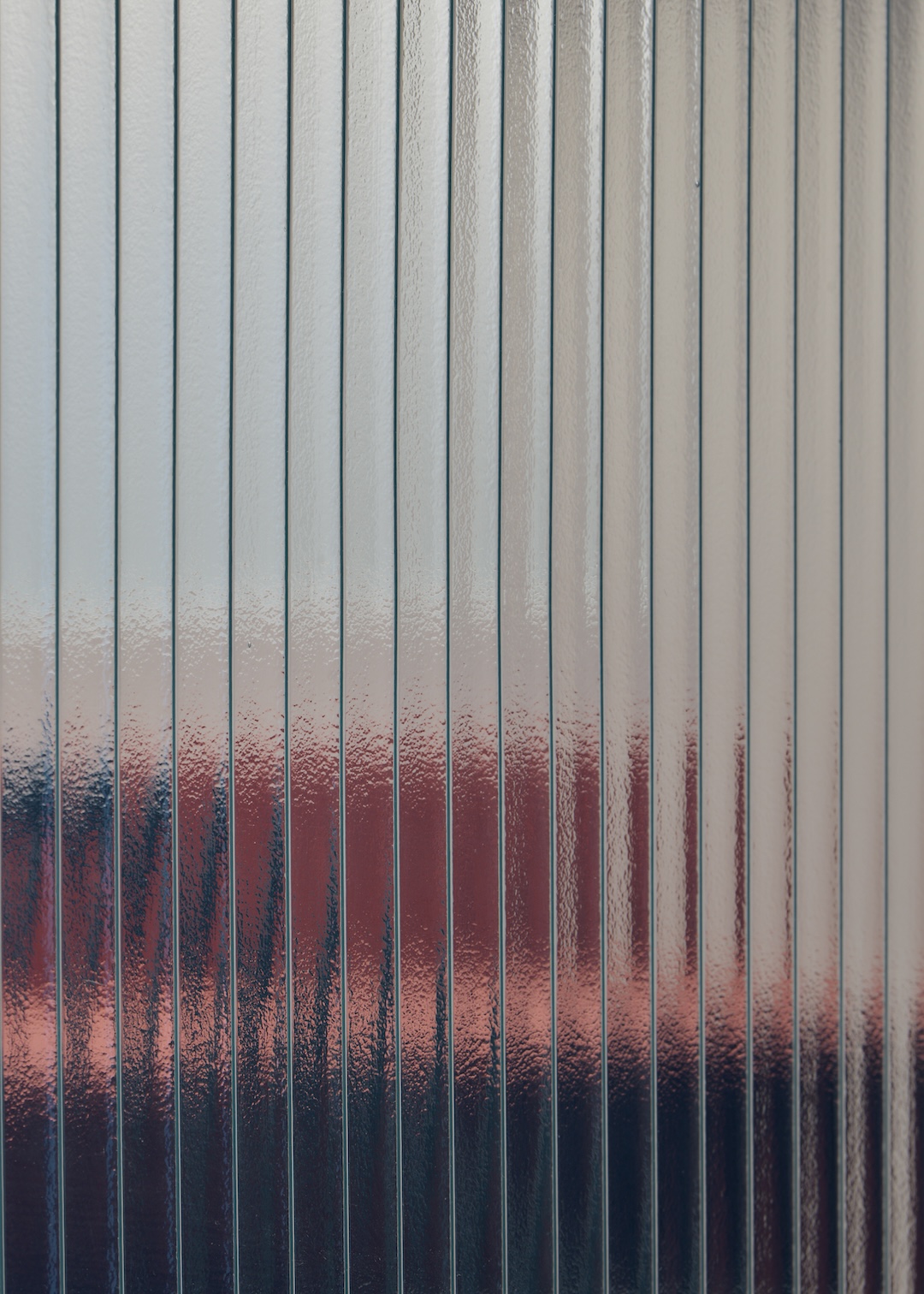
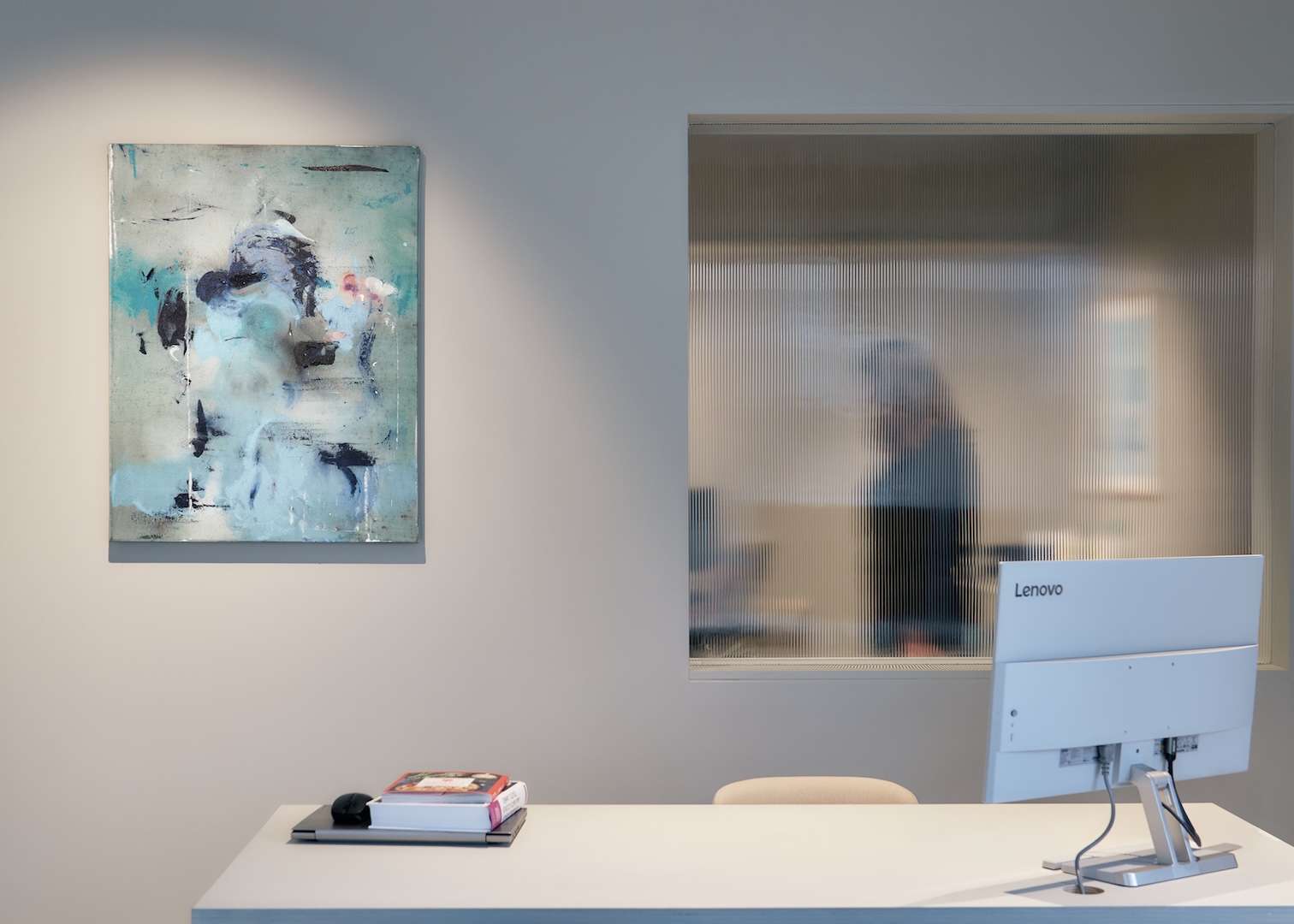
The layout was developed in a rational and efficient manner, organized around a central visitor area visually connected to the reception, distributing access to the different consultation rooms. Spaces requiring less natural light were placed toward the back, while the reception, common areas, and larger consultation rooms are positioned along the façade, benefiting of exposure and views. Textured glass partitions blur the boundary between more shadowed and exposed spaces, filtering views into shifting silhouettes and movement, and lending the interior an almost pictorial quality.
Implementation & Materiality
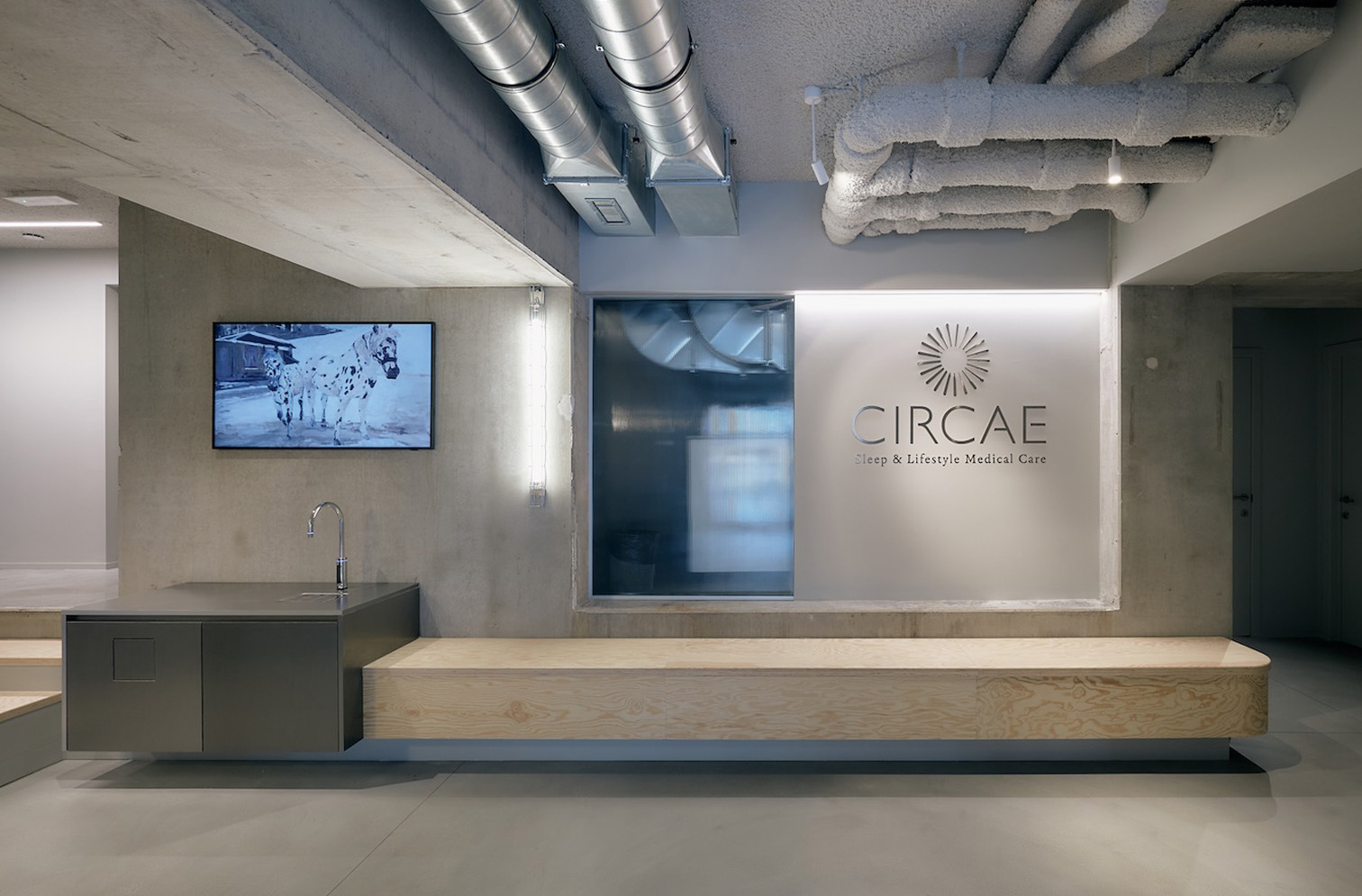
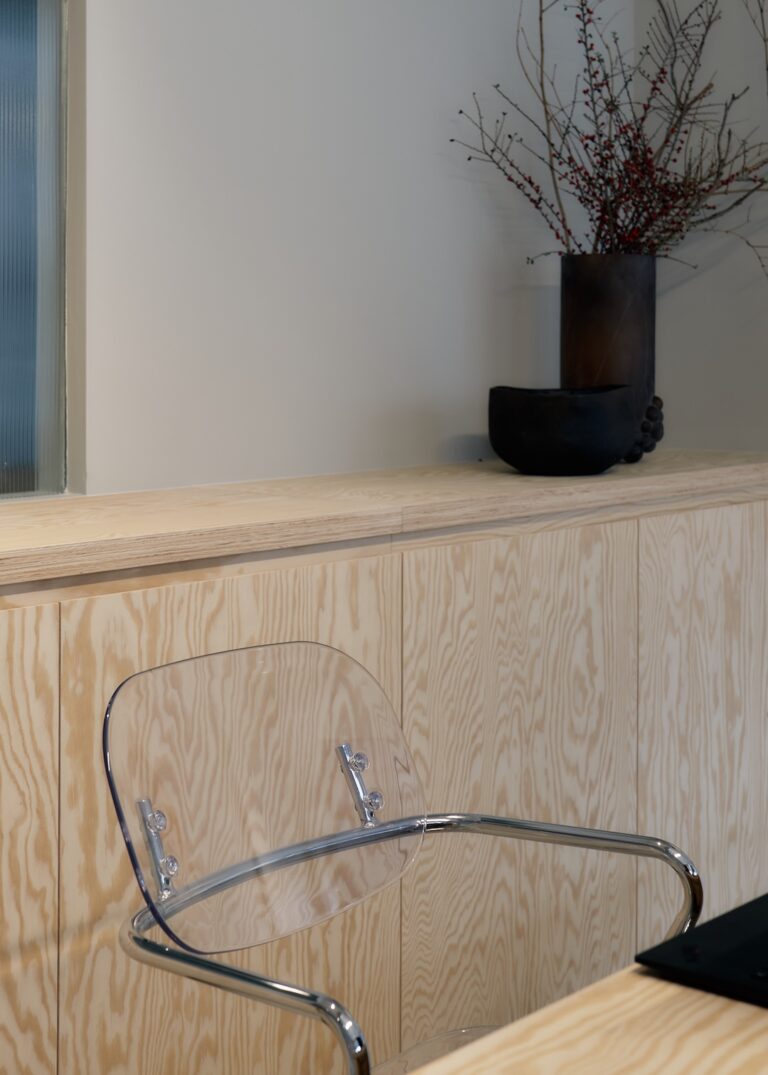
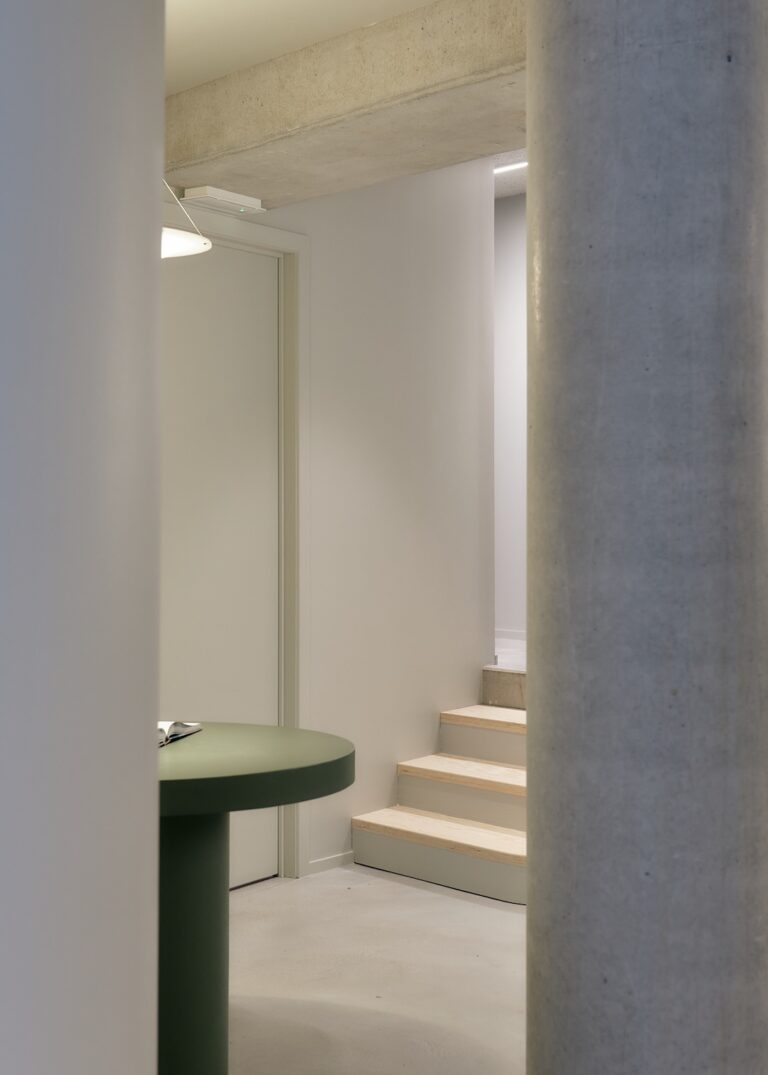
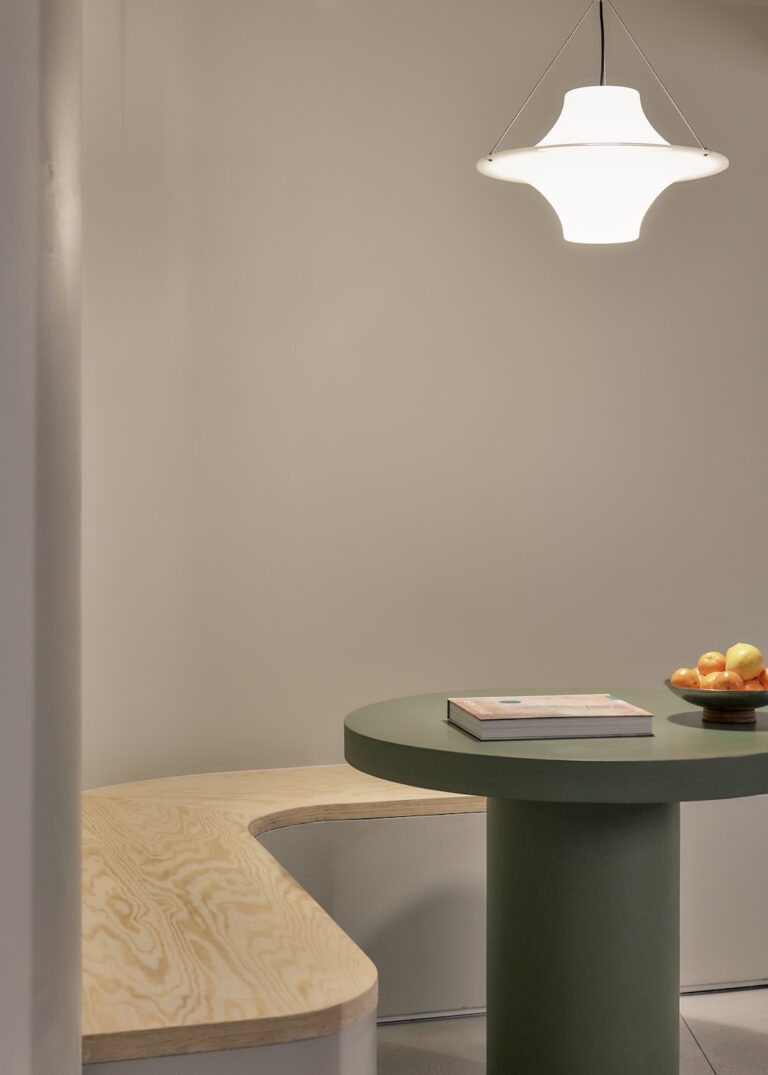
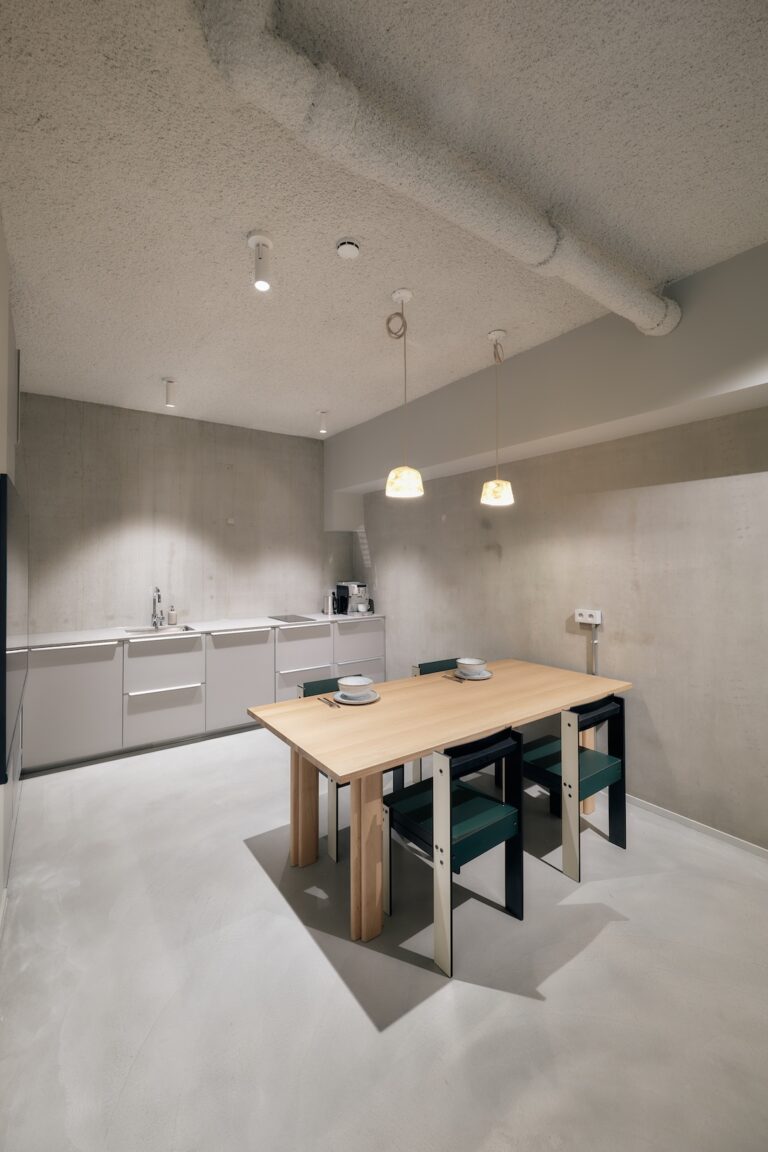
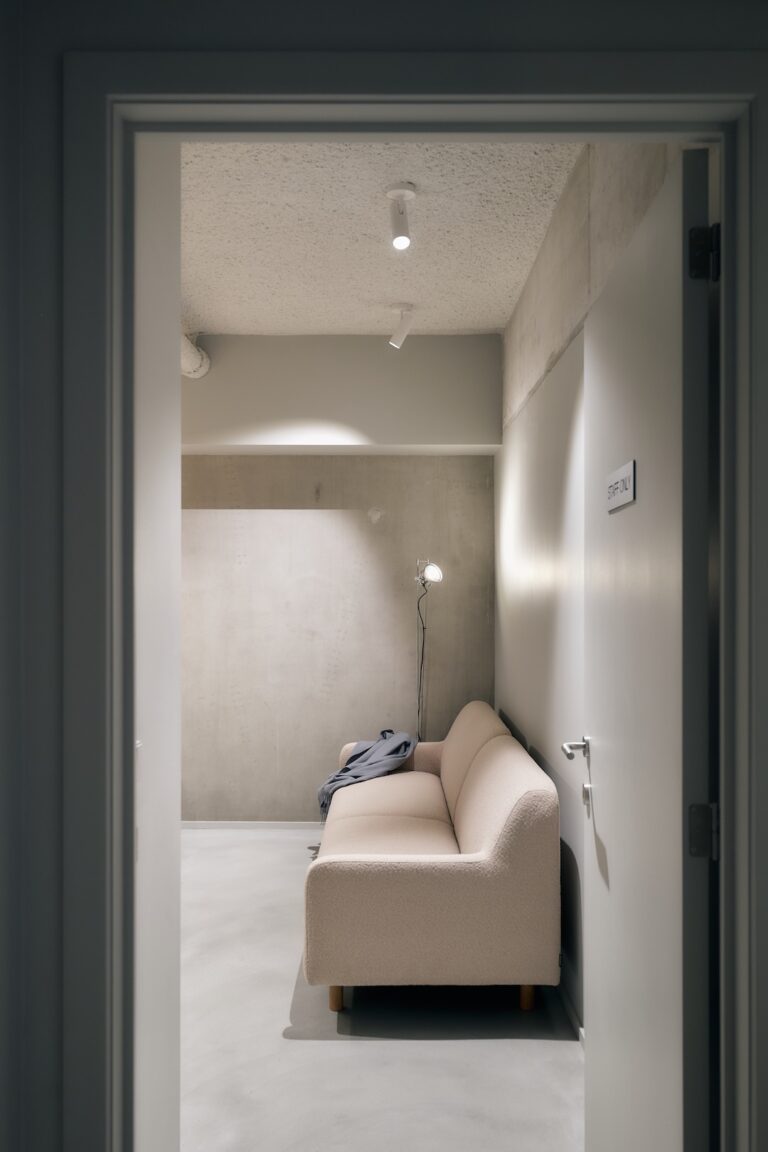
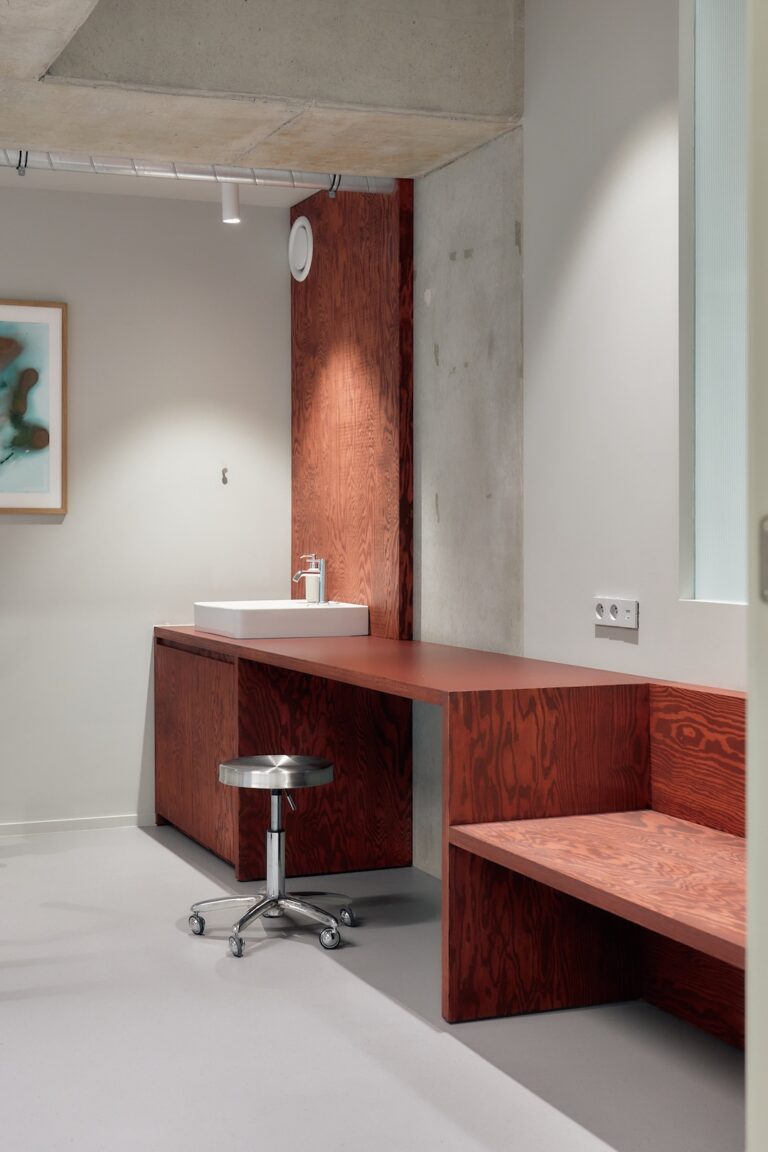
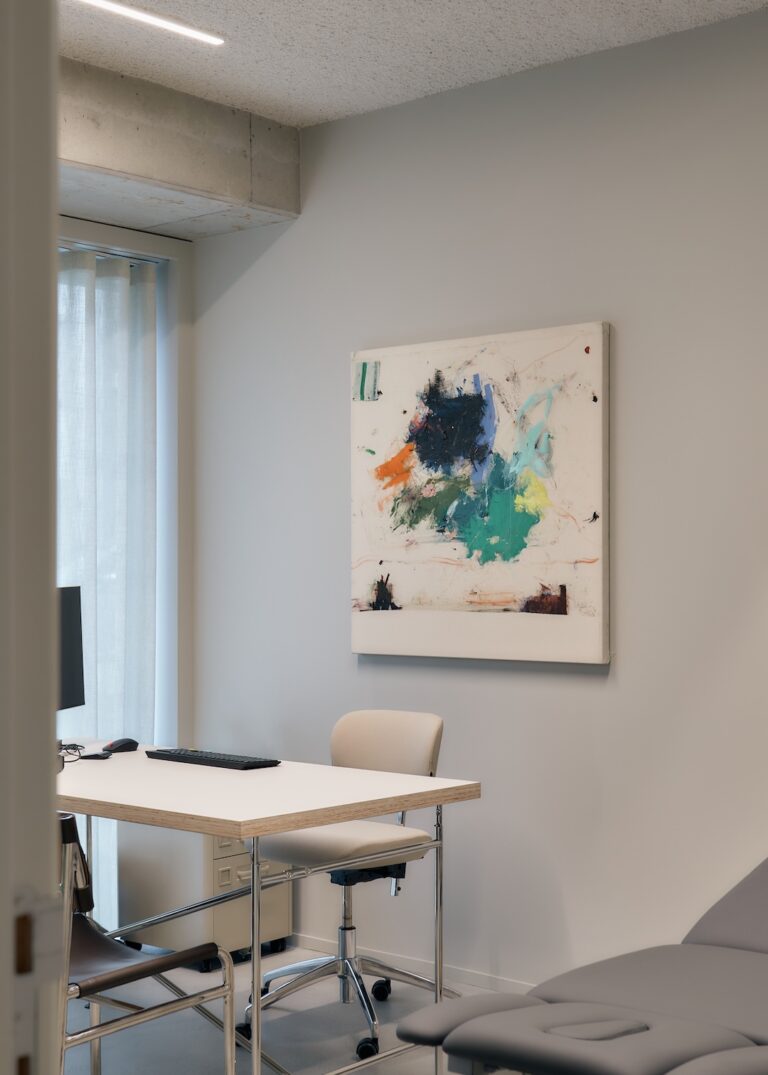
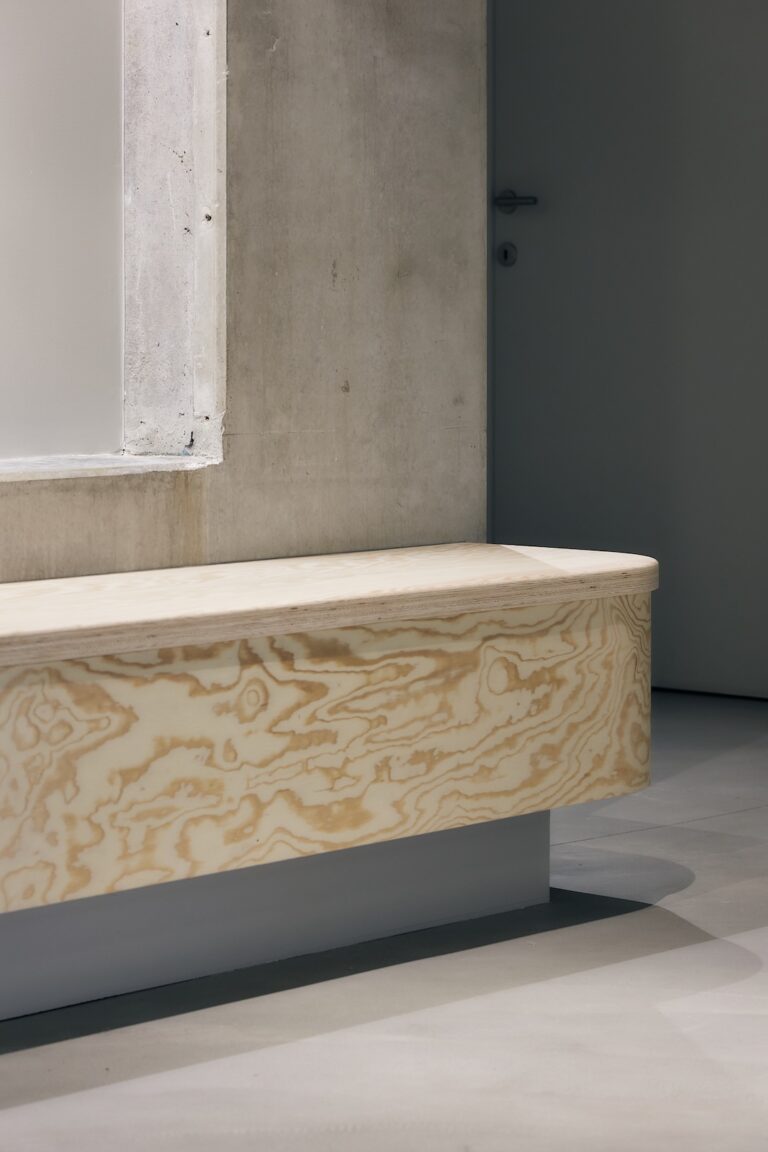
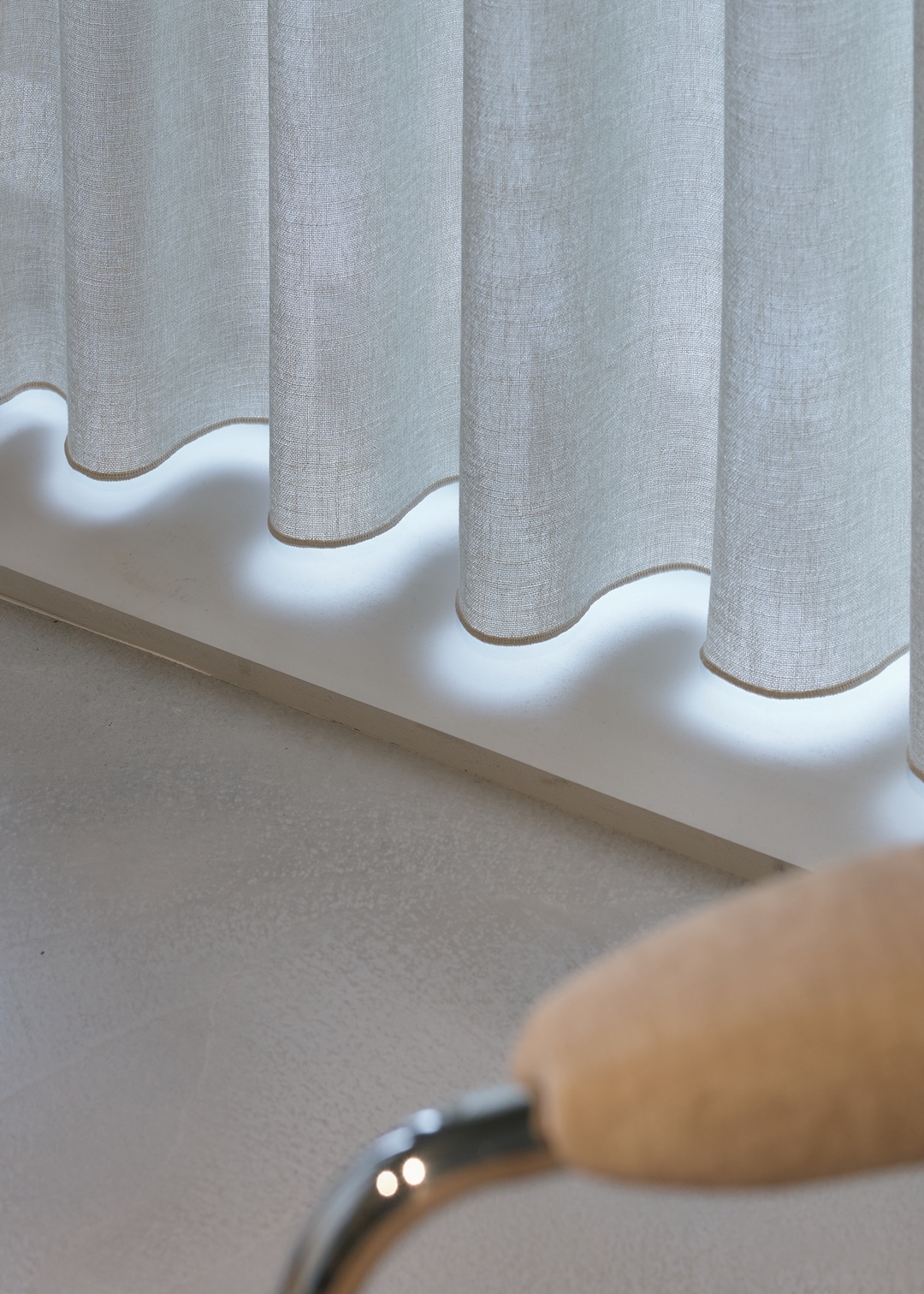
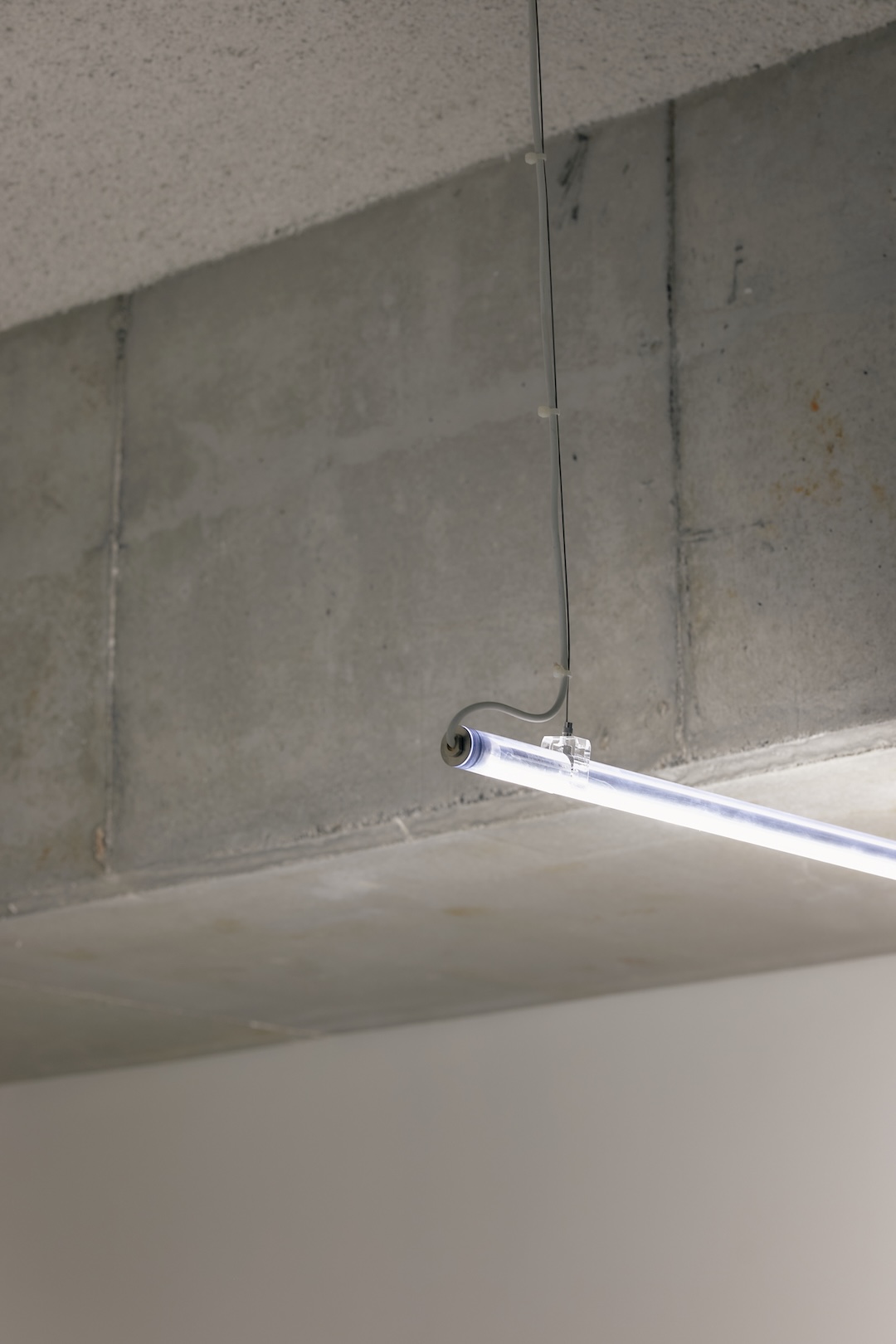
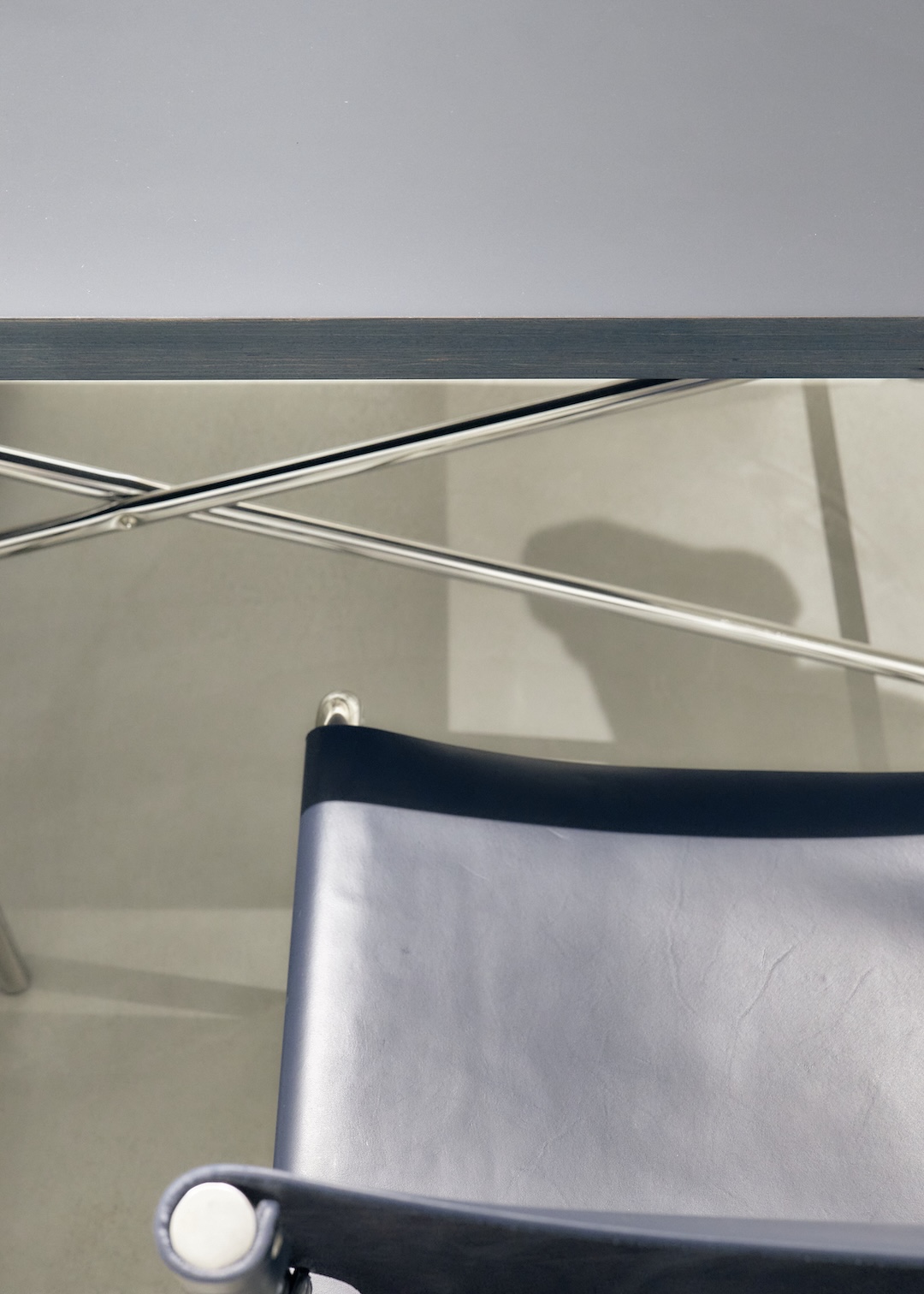
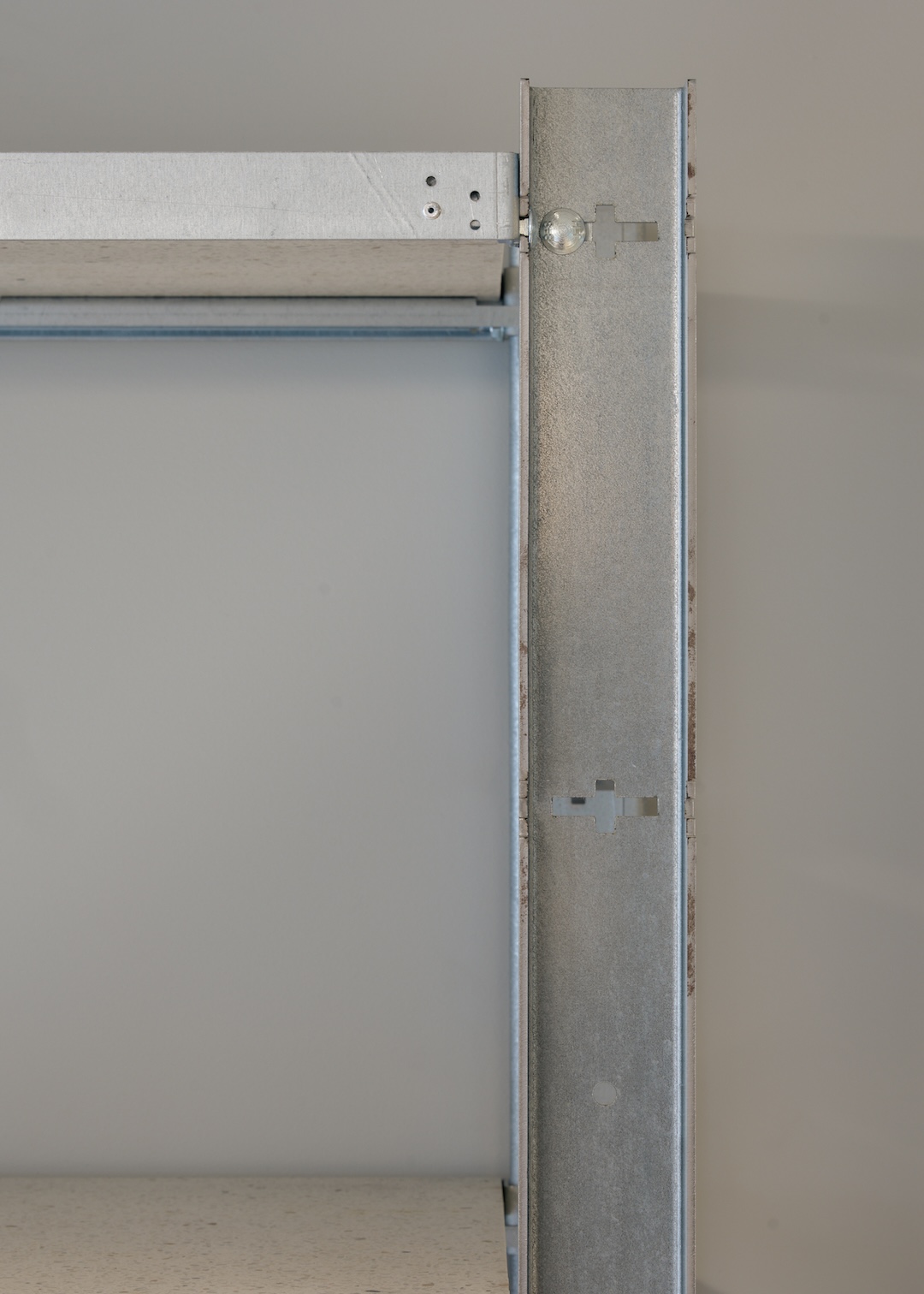
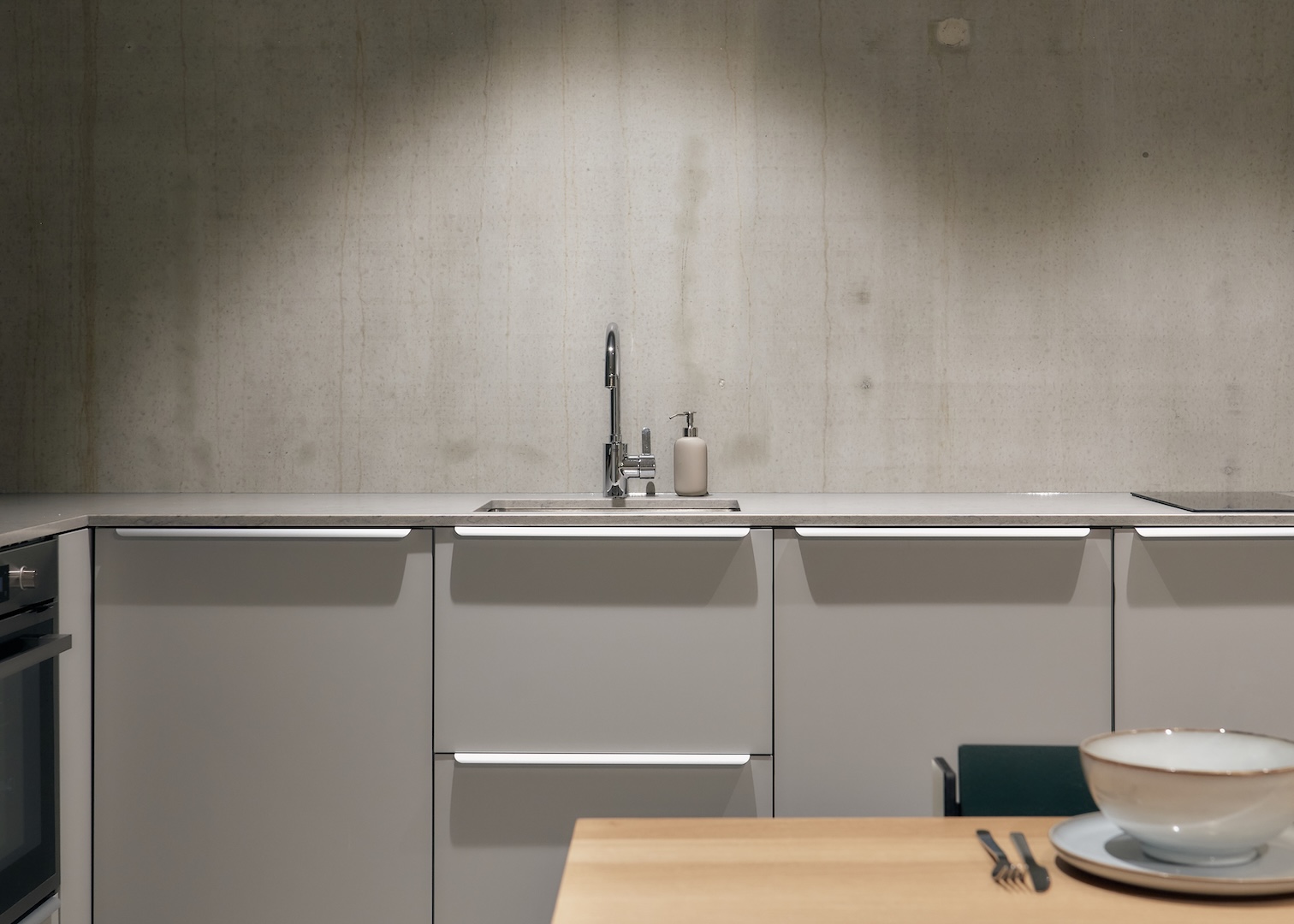
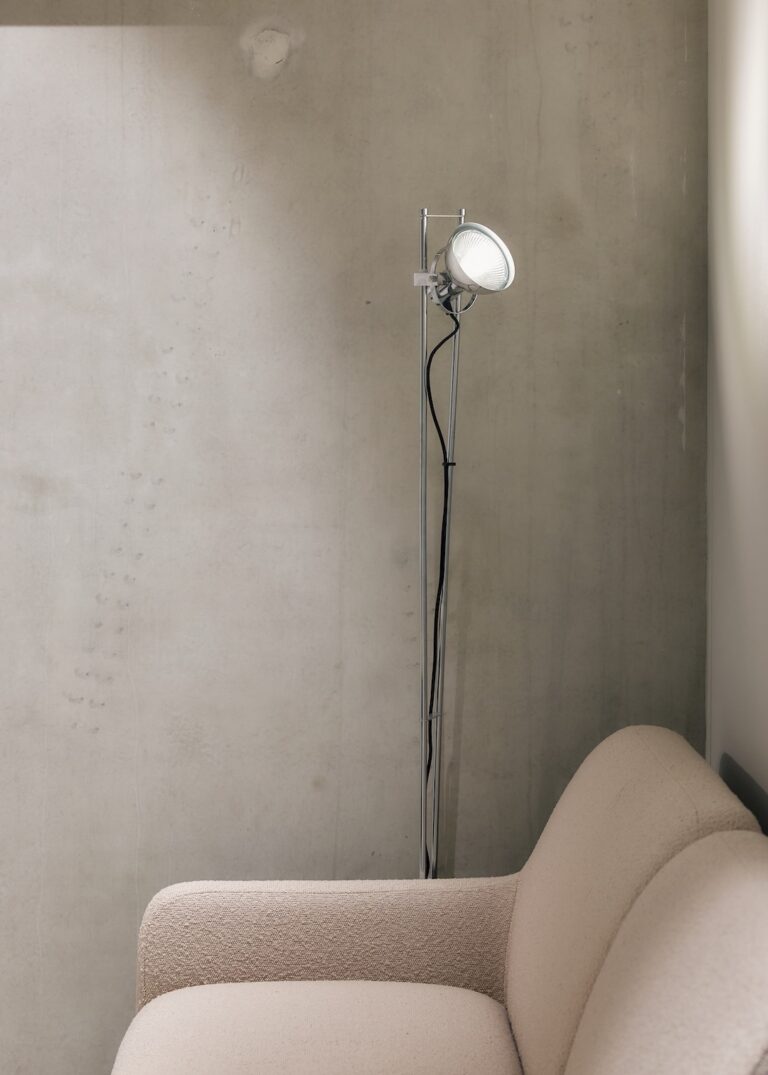
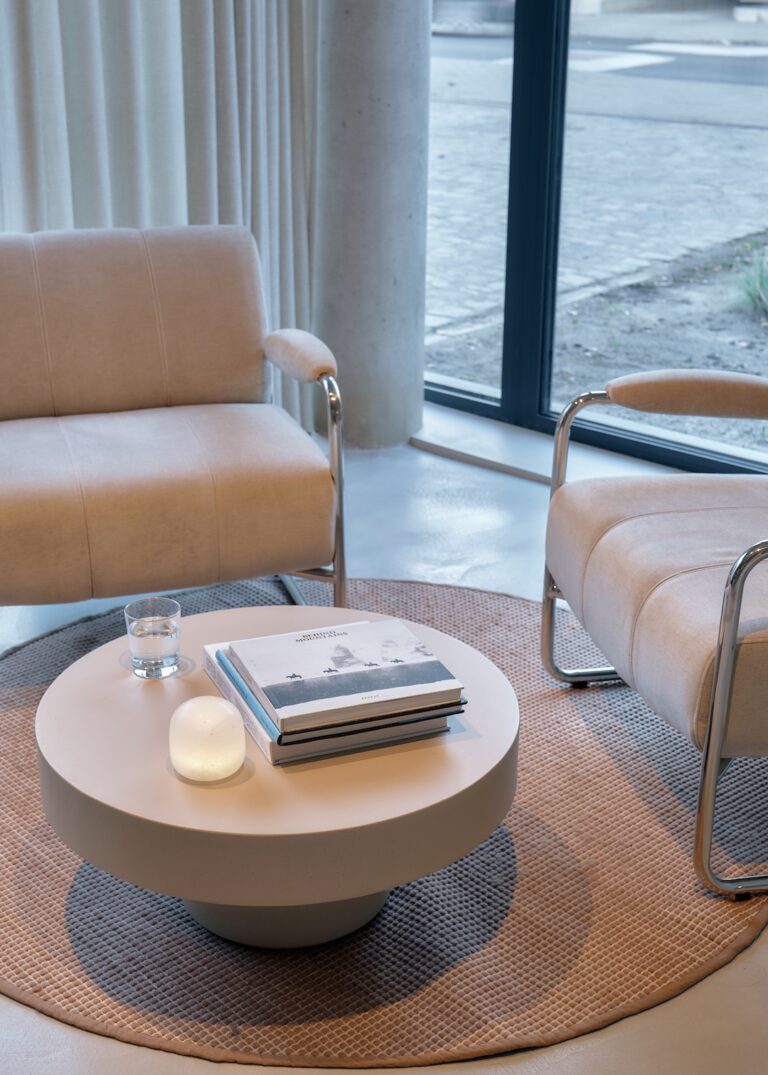
In response to the project’s technical constraints, the look and feel was developed through a restrained palette of honest materials, shaped by the existing structure and the budget limit. A neutral base was maintained through the raw existing walls and floors, allowing space to breathe and set a calm backdrop.
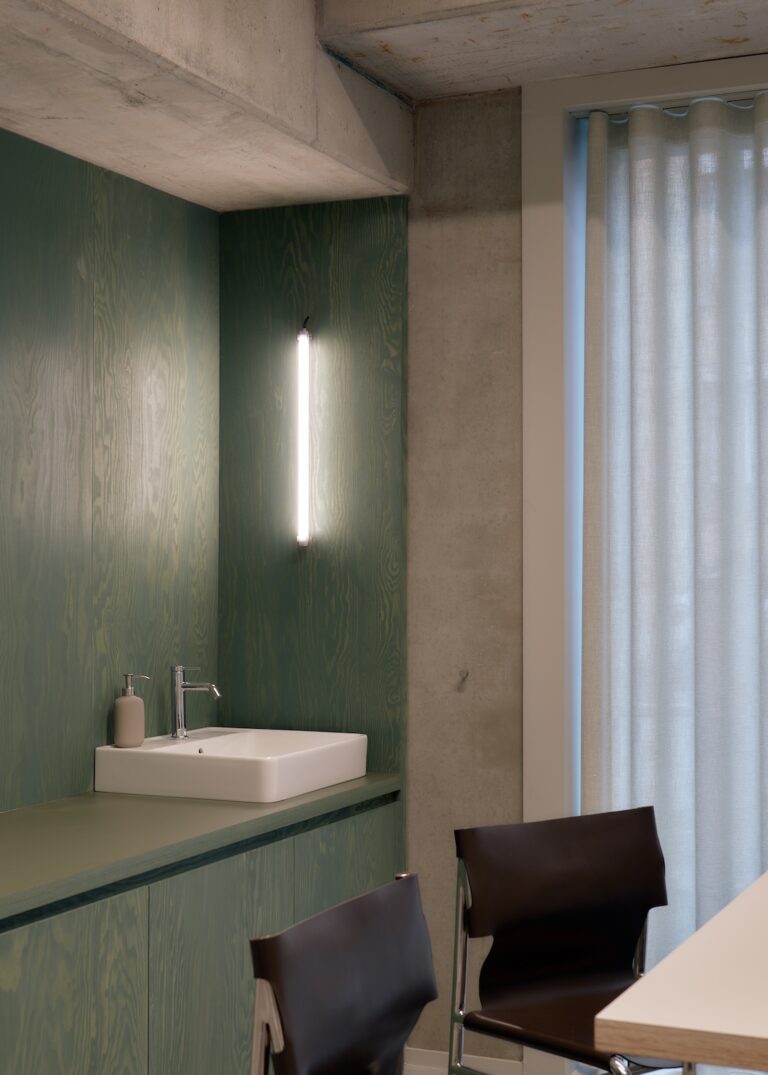
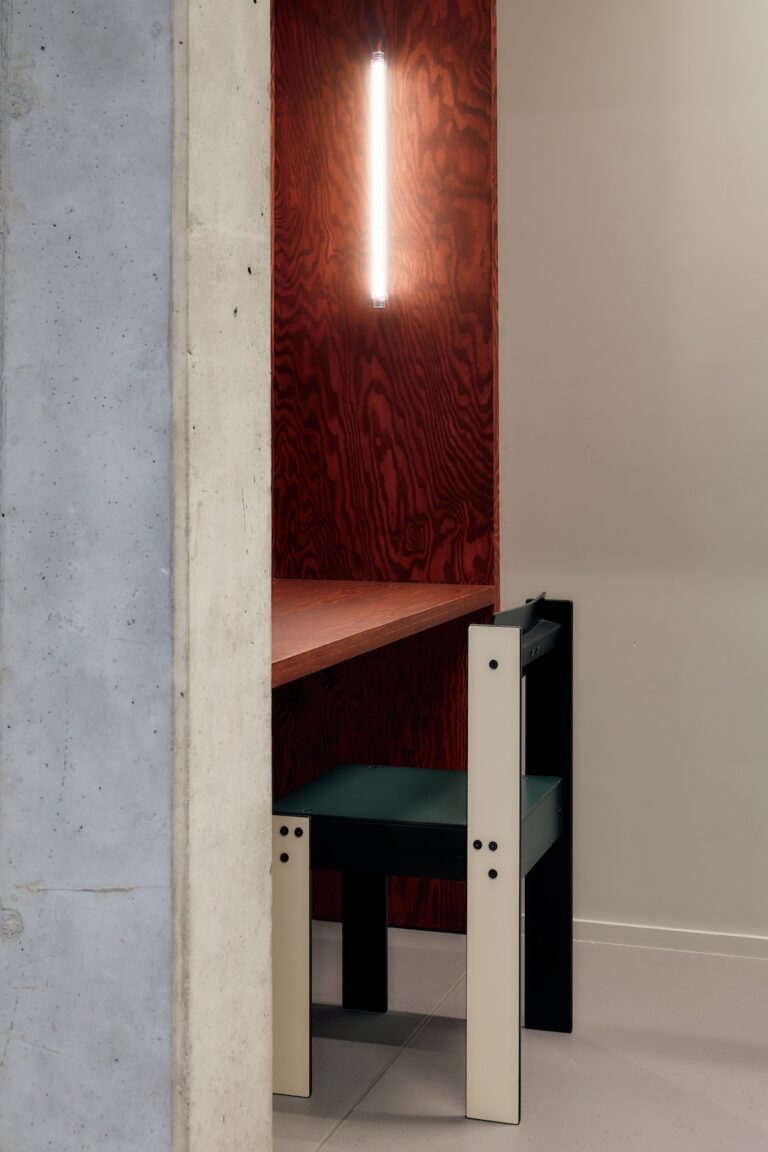
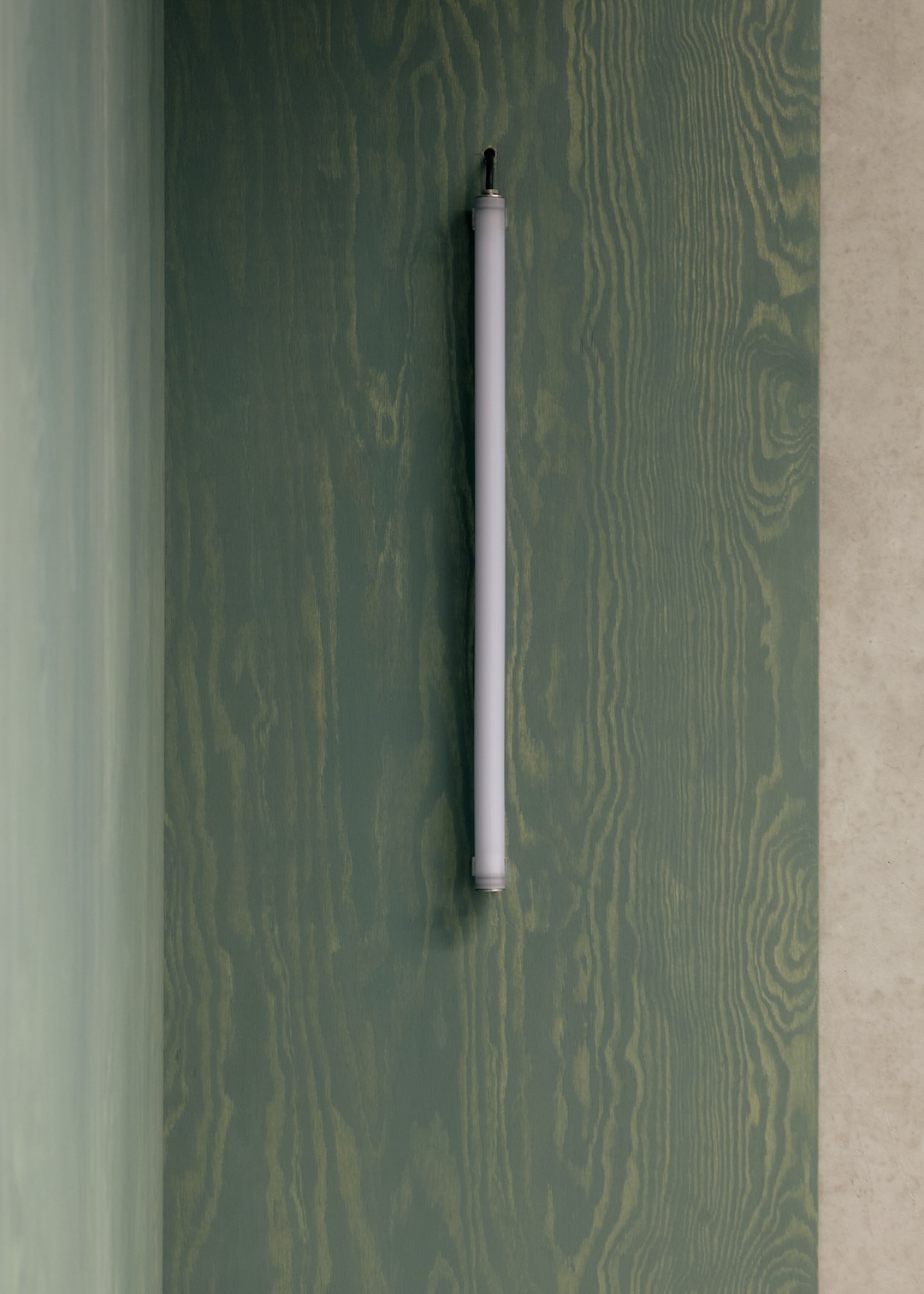
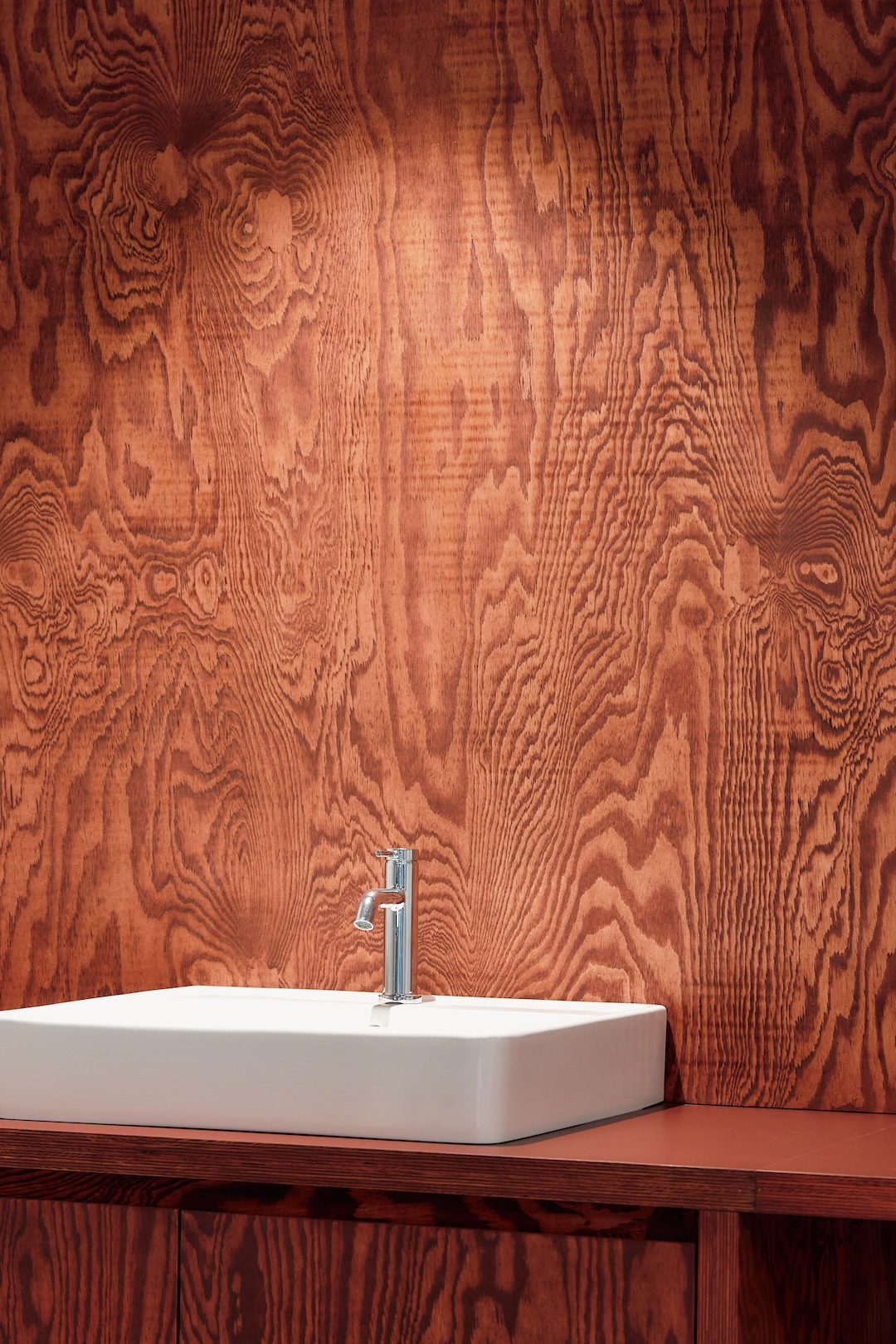
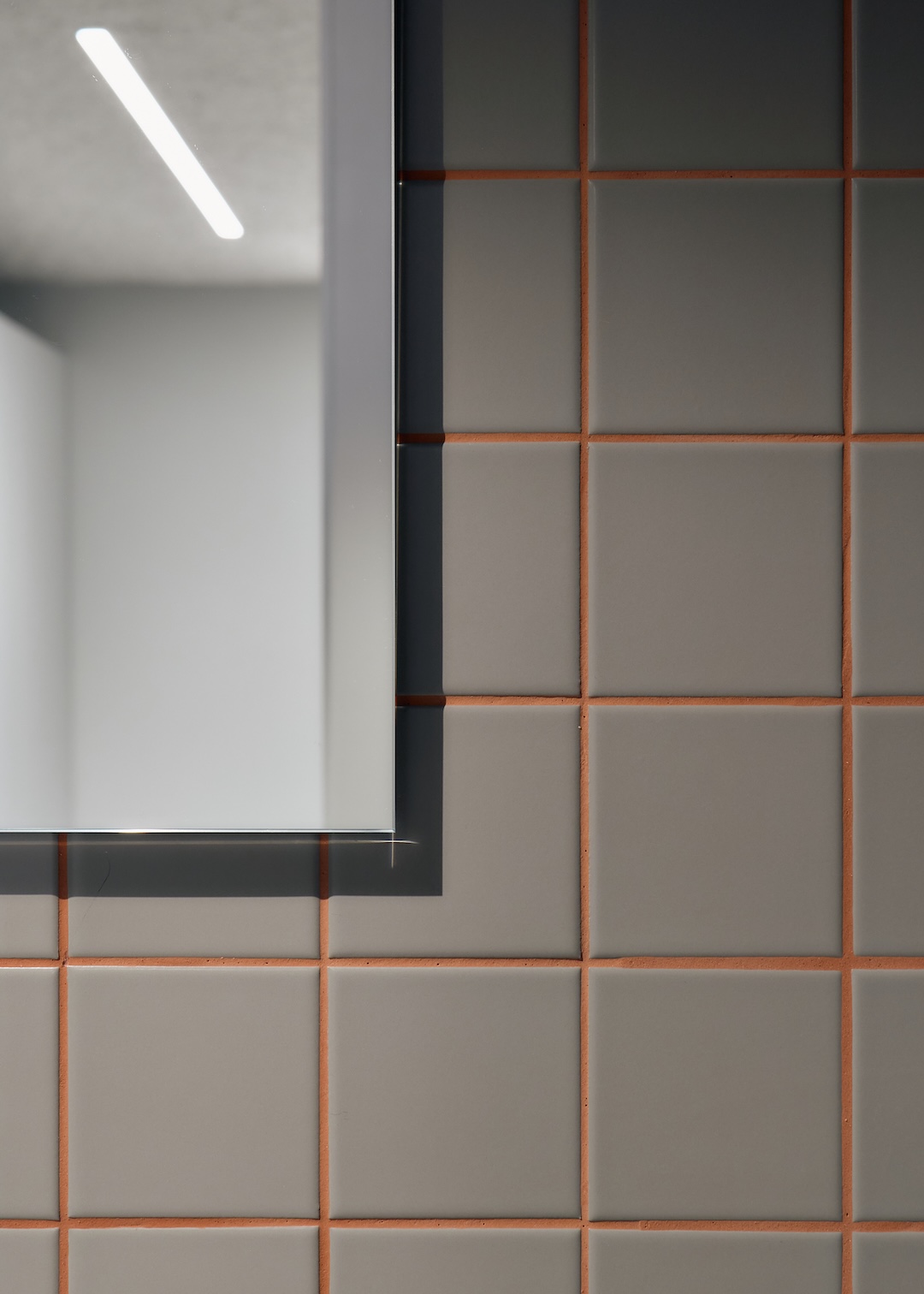
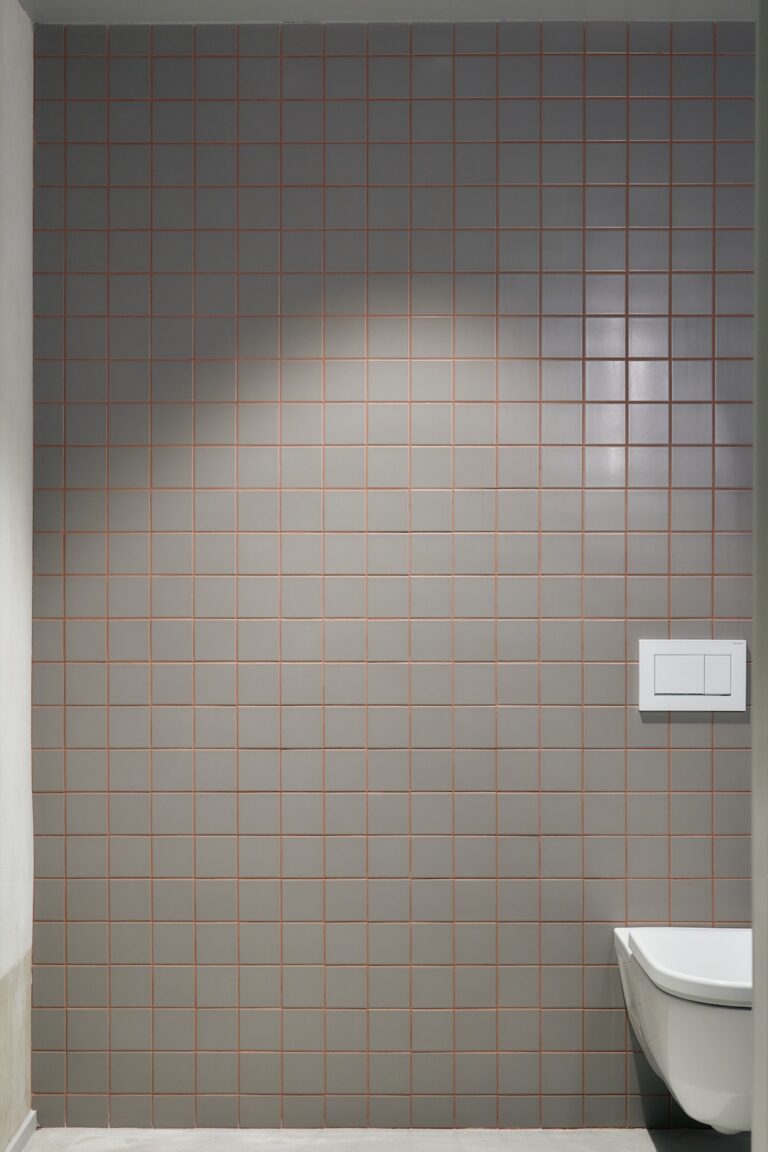
Color was introduced with care and intention. Rather than a decorative gesture, it was used as a subtle tool, informed by research linking color, light, and emotional response. Cooler tones were selected to support calm and focus, while warmer hues introduce energy and reassurance, each room drawing from a restrained spectrum aligned with its therapeutic purpose.
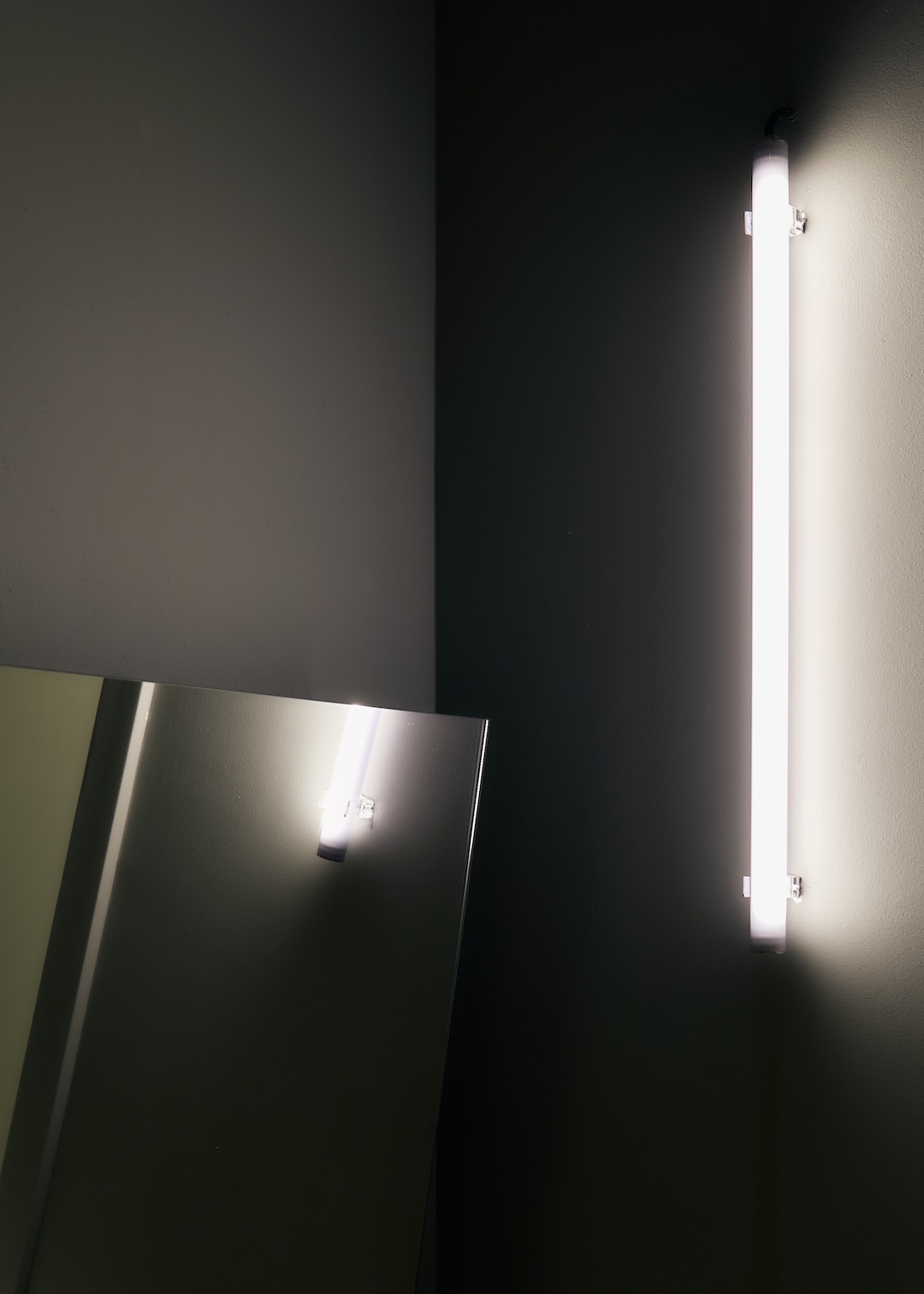
Light follows the same logic, gently adjusted in warmth and intensity to support different forms of care. Together, color and light become active elements of the space and contributors to comfort, balance and supportive atmosphere throughout the clinic.
Project team
Alicia Saen
Alexandra Pustianu
Nina Korkach
Partners
Min Huy Nguyen
HIER
Julian Creativ Prim
KREE
Lambert